取消
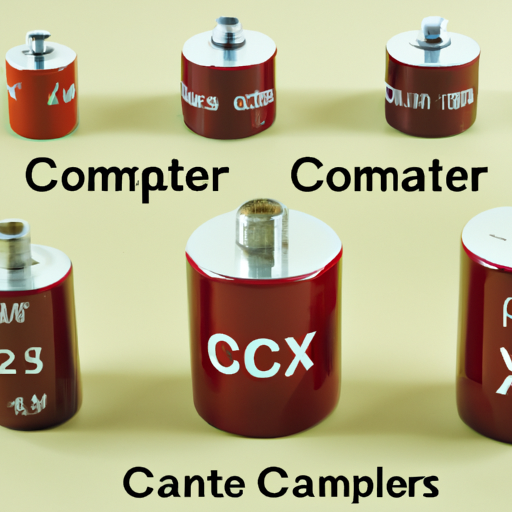
Capacitors are fundamental components in electronic circuits, playing a crucial role in various applications ranging from energy storage to signal processing. A capacitor is a passive electronic device that stores electrical energy in an electric field, created by a pair of conductive plates separated by an insulating material known as a dielectric. Understanding capacitors, their formulas, and the different models available is essential for engineers, hobbyists, and anyone interested in electronics. This article will explore the basic concepts of capacitors, fundamental formulas, configurations, popular models, and practical applications.
Capacitance is the ability of a capacitor to store charge per unit voltage. It is defined mathematically as:
\[ C = \frac{Q}{V} \]
where \( C \) is the capacitance measured in Farads (F), \( Q \) is the charge stored in coulombs (C), and \( V \) is the voltage across the capacitor in volts (V). The capacitance of a capacitor depends on several factors:
1. **Area of the Plates**: The larger the surface area of the conductive plates, the more charge the capacitor can store.
2. **Distance Between Plates**: The closer the plates are to each other, the stronger the electric field and the higher the capacitance.
3. **Dielectric Material**: The type of insulating material between the plates affects the capacitor's ability to store charge. Different materials have different dielectric constants, which influence capacitance.
There are several types of capacitors, each with unique characteristics and applications:
1. **Electrolytic Capacitors**: These capacitors have a high capacitance value and are polarized, meaning they must be connected in the correct direction. They are commonly used in power supply circuits.
2. **Ceramic Capacitors**: Known for their stability and reliability, ceramic capacitors are non-polarized and are often used in high-frequency applications.
3. **Film Capacitors**: These capacitors use a thin plastic film as the dielectric. They are known for their low loss and high stability, making them suitable for audio and RF applications.
4. **Tantalum Capacitors**: Similar to electrolytic capacitors but with a higher capacitance-to-volume ratio, tantalum capacitors are also polarized and are used in compact electronic devices.
5. **Supercapacitors**: These capacitors can store a large amount of energy and are used in applications requiring quick bursts of power, such as in electric vehicles and renewable energy systems.
The basic formula for capacitance is:
\[ C = \frac{Q}{V} \]
This formula highlights the relationship between charge, voltage, and capacitance, allowing engineers to calculate the required capacitance for specific applications.
The energy (\( E \)) stored in a capacitor can be calculated using the formula:
\[ E = \frac{1}{2} CV^2 \]
This equation shows that the energy stored in a capacitor is proportional to the capacitance and the square of the voltage across it. The energy is stored in the electric field created between the plates of the capacitor.
Capacitors charge and discharge over time, and their behavior can be described by the following equations:
1. **Charging Equation**:
\[ V(t) = V_0(1 - e^{-\frac{t}{RC}}) \]
2. **Discharging Equation**:
\[ V(t) = V_0 e^{-\frac{t}{RC}} \]
In these equations, \( V_0 \) is the initial voltage, \( t \) is time, \( R \) is the resistance in the circuit, and \( C \) is the capacitance. The time constant (\( \tau \)) is defined as:
\[ \tau = RC \]
This time constant indicates how quickly a capacitor charges or discharges, with larger values resulting in slower changes.
When capacitors are connected in series, the total capacitance (\( C_{\text{total}} \)) can be calculated using the formula:
\[ \frac{1}{C_{\text{total}}} = \frac{1}{C_1} + \frac{1}{C_2} + ... + \frac{1}{C_n} \]
In a series configuration, the total capacitance is always less than the smallest individual capacitor. The voltage across each capacitor adds up to the total voltage, while the charge remains the same across all capacitors.
In a parallel configuration, the total capacitance is simply the sum of the individual capacitances:
\[ C_{\text{total}} = C_1 + C_2 + ... + C_n \]
This configuration allows the total capacitance to increase, providing a larger charge storage capacity. The voltage across each capacitor is the same, while the total charge is the sum of the charges on each capacitor.
The ideal capacitor model assumes that the capacitor has no resistance or inductance, and it can store charge indefinitely without any loss. This model is useful for theoretical calculations and basic circuit analysis.
In practice, capacitors exhibit non-ideal behaviors due to various factors:
1. **Equivalent Series Resistance (ESR)**: This represents the resistive losses in the capacitor, which can affect performance, especially in high-frequency applications.
2. **Equivalent Series Inductance (ESL)**: This accounts for the inductive effects that occur due to the physical construction of the capacitor, impacting its behavior at high frequencies.
3. **Dielectric Absorption**: This phenomenon refers to the tendency of a capacitor to retain some charge even after being discharged, which can lead to unexpected behavior in circuits.
Understanding these models is crucial for engineers when designing circuits. For example, in power supply circuits, low ESR capacitors are preferred to minimize energy loss, while in RF applications, capacitors with low ESL are essential for maintaining signal integrity.
Capacitors are widely used in filtering applications, such as:
1. **Power Supply Smoothing**: Capacitors smooth out voltage fluctuations in power supplies, providing a stable output voltage.
2. **Signal Coupling and Decoupling**: Capacitors can couple AC signals between stages of an amplifier while blocking DC components, or decouple noise from power supply lines.
Capacitors are also essential in timing applications:
1. **RC Timing Circuits**: By combining resistors and capacitors, engineers can create timing circuits that control the timing of events in electronic devices.
2. **Oscillators**: Capacitors are used in oscillator circuits to generate periodic signals, which are fundamental in communication systems.
Capacitors play a vital role in energy storage applications:
1. **Power Backup Systems**: Capacitors can provide short-term power during outages, ensuring that critical systems remain operational.
2. **Electric Vehicles**: Supercapacitors are increasingly used in electric vehicles for quick energy storage and release, enhancing performance and efficiency.
In summary, capacitors are essential components in electronic circuits, with a wide range of applications and configurations. Understanding the fundamental formulas, types, and models of capacitors is crucial for anyone involved in electronics. Whether you are an engineer designing complex circuits or a hobbyist experimenting with simple projects, a solid grasp of capacitor principles will enhance your ability to create effective and reliable electronic systems. We encourage further exploration and study in this fascinating field, as the world of electronics continues to evolve and expand.
For those interested in delving deeper into the subject of capacitors, the following resources are recommended:
1. "The Art of Electronics" by Paul Horowitz and Winfield Hill
2. "Capacitors: Technology and Applications" by John W. McGowan
3. Online resources such as the Electronics Tutorials website and educational platforms like Coursera and edX.
These references provide valuable insights and detailed explanations of capacitors and their applications in modern electronics.
Capacitors are fundamental components in electronic circuits, playing a crucial role in various applications ranging from energy storage to signal processing. A capacitor is a passive electronic device that stores electrical energy in an electric field, created by a pair of conductive plates separated by an insulating material known as a dielectric. Understanding capacitors, their formulas, and the different models available is essential for engineers, hobbyists, and anyone interested in electronics. This article will explore the basic concepts of capacitors, fundamental formulas, configurations, popular models, and practical applications.
Capacitance is the ability of a capacitor to store charge per unit voltage. It is defined mathematically as:
\[ C = \frac{Q}{V} \]
where \( C \) is the capacitance measured in Farads (F), \( Q \) is the charge stored in coulombs (C), and \( V \) is the voltage across the capacitor in volts (V). The capacitance of a capacitor depends on several factors:
1. **Area of the Plates**: The larger the surface area of the conductive plates, the more charge the capacitor can store.
2. **Distance Between Plates**: The closer the plates are to each other, the stronger the electric field and the higher the capacitance.
3. **Dielectric Material**: The type of insulating material between the plates affects the capacitor's ability to store charge. Different materials have different dielectric constants, which influence capacitance.
There are several types of capacitors, each with unique characteristics and applications:
1. **Electrolytic Capacitors**: These capacitors have a high capacitance value and are polarized, meaning they must be connected in the correct direction. They are commonly used in power supply circuits.
2. **Ceramic Capacitors**: Known for their stability and reliability, ceramic capacitors are non-polarized and are often used in high-frequency applications.
3. **Film Capacitors**: These capacitors use a thin plastic film as the dielectric. They are known for their low loss and high stability, making them suitable for audio and RF applications.
4. **Tantalum Capacitors**: Similar to electrolytic capacitors but with a higher capacitance-to-volume ratio, tantalum capacitors are also polarized and are used in compact electronic devices.
5. **Supercapacitors**: These capacitors can store a large amount of energy and are used in applications requiring quick bursts of power, such as in electric vehicles and renewable energy systems.
The basic formula for capacitance is:
\[ C = \frac{Q}{V} \]
This formula highlights the relationship between charge, voltage, and capacitance, allowing engineers to calculate the required capacitance for specific applications.
The energy (\( E \)) stored in a capacitor can be calculated using the formula:
\[ E = \frac{1}{2} CV^2 \]
This equation shows that the energy stored in a capacitor is proportional to the capacitance and the square of the voltage across it. The energy is stored in the electric field created between the plates of the capacitor.
Capacitors charge and discharge over time, and their behavior can be described by the following equations:
1. **Charging Equation**:
\[ V(t) = V_0(1 - e^{-\frac{t}{RC}}) \]
2. **Discharging Equation**:
\[ V(t) = V_0 e^{-\frac{t}{RC}} \]
In these equations, \( V_0 \) is the initial voltage, \( t \) is time, \( R \) is the resistance in the circuit, and \( C \) is the capacitance. The time constant (\( \tau \)) is defined as:
\[ \tau = RC \]
This time constant indicates how quickly a capacitor charges or discharges, with larger values resulting in slower changes.
When capacitors are connected in series, the total capacitance (\( C_{\text{total}} \)) can be calculated using the formula:
\[ \frac{1}{C_{\text{total}}} = \frac{1}{C_1} + \frac{1}{C_2} + ... + \frac{1}{C_n} \]
In a series configuration, the total capacitance is always less than the smallest individual capacitor. The voltage across each capacitor adds up to the total voltage, while the charge remains the same across all capacitors.
In a parallel configuration, the total capacitance is simply the sum of the individual capacitances:
\[ C_{\text{total}} = C_1 + C_2 + ... + C_n \]
This configuration allows the total capacitance to increase, providing a larger charge storage capacity. The voltage across each capacitor is the same, while the total charge is the sum of the charges on each capacitor.
The ideal capacitor model assumes that the capacitor has no resistance or inductance, and it can store charge indefinitely without any loss. This model is useful for theoretical calculations and basic circuit analysis.
In practice, capacitors exhibit non-ideal behaviors due to various factors:
1. **Equivalent Series Resistance (ESR)**: This represents the resistive losses in the capacitor, which can affect performance, especially in high-frequency applications.
2. **Equivalent Series Inductance (ESL)**: This accounts for the inductive effects that occur due to the physical construction of the capacitor, impacting its behavior at high frequencies.
3. **Dielectric Absorption**: This phenomenon refers to the tendency of a capacitor to retain some charge even after being discharged, which can lead to unexpected behavior in circuits.
Understanding these models is crucial for engineers when designing circuits. For example, in power supply circuits, low ESR capacitors are preferred to minimize energy loss, while in RF applications, capacitors with low ESL are essential for maintaining signal integrity.
Capacitors are widely used in filtering applications, such as:
1. **Power Supply Smoothing**: Capacitors smooth out voltage fluctuations in power supplies, providing a stable output voltage.
2. **Signal Coupling and Decoupling**: Capacitors can couple AC signals between stages of an amplifier while blocking DC components, or decouple noise from power supply lines.
Capacitors are also essential in timing applications:
1. **RC Timing Circuits**: By combining resistors and capacitors, engineers can create timing circuits that control the timing of events in electronic devices.
2. **Oscillators**: Capacitors are used in oscillator circuits to generate periodic signals, which are fundamental in communication systems.
Capacitors play a vital role in energy storage applications:
1. **Power Backup Systems**: Capacitors can provide short-term power during outages, ensuring that critical systems remain operational.
2. **Electric Vehicles**: Supercapacitors are increasingly used in electric vehicles for quick energy storage and release, enhancing performance and efficiency.
In summary, capacitors are essential components in electronic circuits, with a wide range of applications and configurations. Understanding the fundamental formulas, types, and models of capacitors is crucial for anyone involved in electronics. Whether you are an engineer designing complex circuits or a hobbyist experimenting with simple projects, a solid grasp of capacitor principles will enhance your ability to create effective and reliable electronic systems. We encourage further exploration and study in this fascinating field, as the world of electronics continues to evolve and expand.
For those interested in delving deeper into the subject of capacitors, the following resources are recommended:
1. "The Art of Electronics" by Paul Horowitz and Winfield Hill
2. "Capacitors: Technology and Applications" by John W. McGowan
3. Online resources such as the Electronics Tutorials website and educational platforms like Coursera and edX.
These references provide valuable insights and detailed explanations of capacitors and their applications in modern electronics.