取消
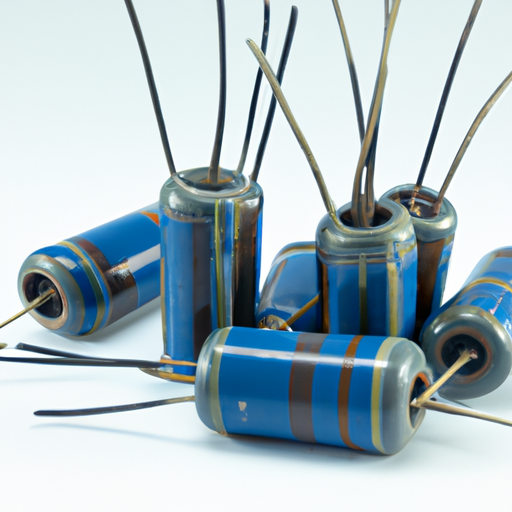
Capacitors are fundamental components in electronic circuits, playing a crucial role in the storage and management of electrical energy. They are passive electronic devices that store energy in an electric field, allowing them to perform various functions such as filtering, timing, and coupling signals. This article aims to provide an overview of the different types of capacitors, their characteristics, applications, and the factors influencing their selection in electronic designs.
Capacitors operate on the principle of storing electrical energy in an electric field created between two conductive plates separated by an insulating material known as a dielectric. When a voltage is applied across the plates, an electric charge accumulates, allowing the capacitor to store energy. The amount of charge a capacitor can hold is defined by its capacitance, measured in farads (F).
1. **Dielectric Materials**: The dielectric is a crucial component that affects a capacitor's performance. Common dielectric materials include ceramic, polyester, polypropylene, and tantalum oxide. The choice of dielectric influences the capacitor's capacitance, voltage rating, and temperature stability.
2. **Plates and Their Arrangement**: The conductive plates can be arranged in various configurations, such as parallel or rolled, to optimize the capacitor's size and performance. The surface area of the plates and the distance between them also play significant roles in determining the capacitance value.
Capacitors can be broadly categorized into fixed, variable, supercapacitors, and specialty capacitors, each with unique characteristics and applications.
Fixed capacitors have a predetermined capacitance value that cannot be adjusted. They are widely used in various electronic applications.
1. **Ceramic Capacitors**
- **Characteristics**: Ceramic capacitors are made from ceramic materials and are known for their small size, low cost, and stability over a wide temperature range.
- **Applications**: Commonly used in decoupling, filtering, and timing applications in consumer electronics, automotive, and telecommunications.
2. **Film Capacitors**
- **Types of Film Capacitors**: These include polyester, polypropylene, and polystyrene capacitors, each with distinct properties.
- **Advantages and Disadvantages**: Film capacitors offer excellent stability and low losses but can be bulkier than other types. They are often used in audio equipment, power supplies, and motor applications.
3. **Electrolytic Capacitors**
- **Construction and Working Principle**: Electrolytic capacitors use an electrolyte as one of the plates, allowing for higher capacitance values in a smaller size.
- **Common Uses and Limitations**: They are widely used in power supply circuits and audio applications but have limitations in terms of voltage ratings and lifespan.
4. **Tantalum Capacitors**
- **Unique Properties**: Tantalum capacitors are known for their high capacitance per volume and stable electrical characteristics.
- **Applications in Modern Electronics**: They are commonly used in compact electronic devices, such as smartphones and tablets, where space is at a premium.
Variable capacitors allow for the adjustment of capacitance values, making them useful in tuning applications.
1. **Definition and Function**: These capacitors can change their capacitance by altering the distance between the plates or the effective area of the plates.
2. **Types of Variable Capacitors**:
- **Trimmer Capacitors**: Used for fine-tuning circuits, often found in radio transmitters and receivers.
- **Air-gap Capacitors**: Utilize air as the dielectric and are commonly used in high-frequency applications.
- **Rotary Capacitors**: Feature a rotating mechanism to adjust capacitance, often used in older radio equipment.
Supercapacitors, also known as ultracapacitors, are energy storage devices that bridge the gap between traditional capacitors and batteries.
1. **Definition and Characteristics**: Supercapacitors have a much higher capacitance than conventional capacitors, allowing them to store significant amounts of energy.
2. **Comparison with Traditional Capacitors**: While traditional capacitors discharge energy quickly, supercapacitors can deliver energy over a longer period, making them suitable for applications requiring rapid charge and discharge cycles.
3. **Applications in Energy Storage and Power Supply**: Supercapacitors are increasingly used in renewable energy systems, electric vehicles, and backup power supplies due to their ability to charge and discharge rapidly.
Specialty capacitors are designed for specific applications and often have unique properties.
1. **Mica Capacitors**
- **Properties and Uses**: Mica capacitors are known for their high stability and low loss, making them ideal for high-frequency applications, such as RF circuits.
2. **Aluminum Capacitors**
- **Features and Applications**: Aluminum capacitors are widely used in power supply circuits due to their high capacitance and relatively low cost.
3. **High Voltage Capacitors**
- **Design Considerations and Applications**: These capacitors are designed to withstand high voltage levels and are used in applications such as power transmission and industrial equipment.
When selecting a capacitor for a specific application, several factors must be considered:
1. **Capacitance Value and Tolerance**: The required capacitance value and acceptable tolerance levels are critical for ensuring circuit performance.
2. **Voltage Rating**: The voltage rating must exceed the maximum voltage the capacitor will experience in the circuit to prevent failure.
3. **Temperature Coefficient**: The temperature coefficient indicates how capacitance changes with temperature, which is essential for applications in varying environmental conditions.
4. **Size and Form Factor**: The physical size and shape of the capacitor can impact its suitability for compact designs.
5. **Application-Specific Requirements**: Certain applications may require specific characteristics, such as low ESR (Equivalent Series Resistance) or high ripple current handling.
The capacitor industry is continually evolving, driven by advancements in materials and manufacturing processes.
New dielectric materials and manufacturing techniques are improving capacitor performance, allowing for higher capacitance values and better reliability.
As electronic devices become smaller and more portable, the demand for flexible and miniaturized capacitors is increasing. These capacitors can be integrated into wearable technology and flexible electronics.
With growing awareness of environmental issues, manufacturers are focusing on sustainable practices, including the development of eco-friendly capacitor materials and recycling programs.
Capacitors are essential components in modern electronics, serving various functions across a wide range of applications. Understanding the different types of capacitors, their characteristics, and the factors influencing their selection is crucial for engineers and designers. As technology continues to advance, the future of capacitor technology looks promising, with innovations that will enhance performance and sustainability in the electronics industry.
For further exploration of capacitors and their applications, consider the following resources:
1. "Capacitors: Principles and Applications" by John Smith
2. "The Art of Electronics" by Paul Horowitz and Winfield Hill
3. Online resources such as IEEE Xplore and Electronics Tutorials for up-to-date research and articles on capacitor technology.
Capacitors are fundamental components in electronic circuits, playing a crucial role in the storage and management of electrical energy. They are passive electronic devices that store energy in an electric field, allowing them to perform various functions such as filtering, timing, and coupling signals. This article aims to provide an overview of the different types of capacitors, their characteristics, applications, and the factors influencing their selection in electronic designs.
Capacitors operate on the principle of storing electrical energy in an electric field created between two conductive plates separated by an insulating material known as a dielectric. When a voltage is applied across the plates, an electric charge accumulates, allowing the capacitor to store energy. The amount of charge a capacitor can hold is defined by its capacitance, measured in farads (F).
1. **Dielectric Materials**: The dielectric is a crucial component that affects a capacitor's performance. Common dielectric materials include ceramic, polyester, polypropylene, and tantalum oxide. The choice of dielectric influences the capacitor's capacitance, voltage rating, and temperature stability.
2. **Plates and Their Arrangement**: The conductive plates can be arranged in various configurations, such as parallel or rolled, to optimize the capacitor's size and performance. The surface area of the plates and the distance between them also play significant roles in determining the capacitance value.
Capacitors can be broadly categorized into fixed, variable, supercapacitors, and specialty capacitors, each with unique characteristics and applications.
Fixed capacitors have a predetermined capacitance value that cannot be adjusted. They are widely used in various electronic applications.
1. **Ceramic Capacitors**
- **Characteristics**: Ceramic capacitors are made from ceramic materials and are known for their small size, low cost, and stability over a wide temperature range.
- **Applications**: Commonly used in decoupling, filtering, and timing applications in consumer electronics, automotive, and telecommunications.
2. **Film Capacitors**
- **Types of Film Capacitors**: These include polyester, polypropylene, and polystyrene capacitors, each with distinct properties.
- **Advantages and Disadvantages**: Film capacitors offer excellent stability and low losses but can be bulkier than other types. They are often used in audio equipment, power supplies, and motor applications.
3. **Electrolytic Capacitors**
- **Construction and Working Principle**: Electrolytic capacitors use an electrolyte as one of the plates, allowing for higher capacitance values in a smaller size.
- **Common Uses and Limitations**: They are widely used in power supply circuits and audio applications but have limitations in terms of voltage ratings and lifespan.
4. **Tantalum Capacitors**
- **Unique Properties**: Tantalum capacitors are known for their high capacitance per volume and stable electrical characteristics.
- **Applications in Modern Electronics**: They are commonly used in compact electronic devices, such as smartphones and tablets, where space is at a premium.
Variable capacitors allow for the adjustment of capacitance values, making them useful in tuning applications.
1. **Definition and Function**: These capacitors can change their capacitance by altering the distance between the plates or the effective area of the plates.
2. **Types of Variable Capacitors**:
- **Trimmer Capacitors**: Used for fine-tuning circuits, often found in radio transmitters and receivers.
- **Air-gap Capacitors**: Utilize air as the dielectric and are commonly used in high-frequency applications.
- **Rotary Capacitors**: Feature a rotating mechanism to adjust capacitance, often used in older radio equipment.
Supercapacitors, also known as ultracapacitors, are energy storage devices that bridge the gap between traditional capacitors and batteries.
1. **Definition and Characteristics**: Supercapacitors have a much higher capacitance than conventional capacitors, allowing them to store significant amounts of energy.
2. **Comparison with Traditional Capacitors**: While traditional capacitors discharge energy quickly, supercapacitors can deliver energy over a longer period, making them suitable for applications requiring rapid charge and discharge cycles.
3. **Applications in Energy Storage and Power Supply**: Supercapacitors are increasingly used in renewable energy systems, electric vehicles, and backup power supplies due to their ability to charge and discharge rapidly.
Specialty capacitors are designed for specific applications and often have unique properties.
1. **Mica Capacitors**
- **Properties and Uses**: Mica capacitors are known for their high stability and low loss, making them ideal for high-frequency applications, such as RF circuits.
2. **Aluminum Capacitors**
- **Features and Applications**: Aluminum capacitors are widely used in power supply circuits due to their high capacitance and relatively low cost.
3. **High Voltage Capacitors**
- **Design Considerations and Applications**: These capacitors are designed to withstand high voltage levels and are used in applications such as power transmission and industrial equipment.
When selecting a capacitor for a specific application, several factors must be considered:
1. **Capacitance Value and Tolerance**: The required capacitance value and acceptable tolerance levels are critical for ensuring circuit performance.
2. **Voltage Rating**: The voltage rating must exceed the maximum voltage the capacitor will experience in the circuit to prevent failure.
3. **Temperature Coefficient**: The temperature coefficient indicates how capacitance changes with temperature, which is essential for applications in varying environmental conditions.
4. **Size and Form Factor**: The physical size and shape of the capacitor can impact its suitability for compact designs.
5. **Application-Specific Requirements**: Certain applications may require specific characteristics, such as low ESR (Equivalent Series Resistance) or high ripple current handling.
The capacitor industry is continually evolving, driven by advancements in materials and manufacturing processes.
New dielectric materials and manufacturing techniques are improving capacitor performance, allowing for higher capacitance values and better reliability.
As electronic devices become smaller and more portable, the demand for flexible and miniaturized capacitors is increasing. These capacitors can be integrated into wearable technology and flexible electronics.
With growing awareness of environmental issues, manufacturers are focusing on sustainable practices, including the development of eco-friendly capacitor materials and recycling programs.
Capacitors are essential components in modern electronics, serving various functions across a wide range of applications. Understanding the different types of capacitors, their characteristics, and the factors influencing their selection is crucial for engineers and designers. As technology continues to advance, the future of capacitor technology looks promising, with innovations that will enhance performance and sustainability in the electronics industry.
For further exploration of capacitors and their applications, consider the following resources:
1. "Capacitors: Principles and Applications" by John Smith
2. "The Art of Electronics" by Paul Horowitz and Winfield Hill
3. Online resources such as IEEE Xplore and Electronics Tutorials for up-to-date research and articles on capacitor technology.