取消
Capacitance is a fundamental concept in the field of electronics, playing a crucial role in the functionality of various electrical circuits. At its core, capacitance refers to the ability of a component, known as a capacitor, to store electrical energy in an electric field. This property is essential for a wide range of applications, from energy storage to signal processing. In this article, we will explore the intricacies of capacitance, how capacitors function, their physical structure, applications, and methods for measuring capacitance.
Capacitance is defined as the amount of electric charge a capacitor can store per unit voltage. The unit of capacitance is the Farad (F), named after the English scientist Michael Faraday. A capacitor with a capacitance of one Farad can store one coulomb of charge at a voltage of one volt.
The relationship between charge (Q), voltage (V), and capacitance (C) is expressed by the formula:
\[ C = \frac{Q}{V} \]
This equation highlights that capacitance is directly proportional to the charge stored and inversely proportional to the voltage across the capacitor.
There are several types of capacitors, each with unique characteristics and applications:
1. **Electrolytic Capacitors**: These capacitors are polarized and typically used for high-capacitance applications, such as power supply filtering.
2. **Ceramic Capacitors**: Known for their stability and reliability, ceramic capacitors are often used in high-frequency applications.
3. **Film Capacitors**: These capacitors use a thin plastic film as the dielectric and are known for their low loss and high stability.
4. **Tantalum Capacitors**: These are also polarized and are used in applications requiring high capacitance in a small volume.
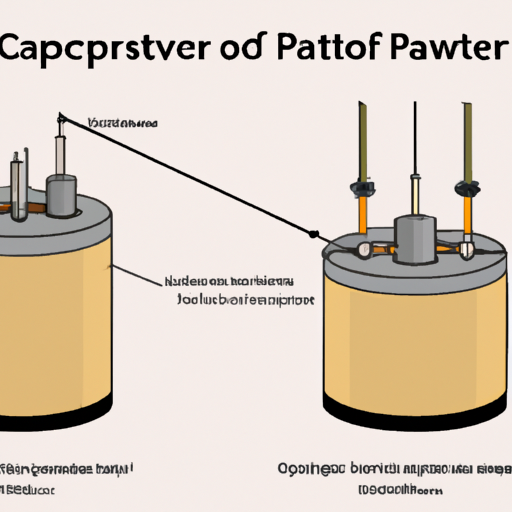
A capacitor consists of two conductive plates separated by an insulating material known as a dielectric. The conductive plates are typically made of metal, while the dielectric can be made from various materials, including ceramic, plastic, or electrolytic solutions.
The dielectric material serves two primary functions: it provides insulation between the plates and affects the capacitor's capacitance. The dielectric constant, a measure of a material's ability to store electrical energy in an electric field, plays a significant role in determining the overall capacitance of the capacitor.
Several factors influence the capacitance of a capacitor:
1. **Plate Area**: The larger the surface area of the conductive plates, the greater the capacitance. This is because a larger area can store more charge.
2. **Distance Between Plates**: The closer the plates are to each other, the higher the capacitance. Reducing the distance increases the electric field strength, allowing more charge to be stored.
3. **Dielectric Constant**: Different dielectric materials have different dielectric constants. A higher dielectric constant results in greater capacitance.
When a voltage is applied across the plates of a capacitor, electrons move from one plate to the other. This movement creates an electric field between the plates, leading to the accumulation of charge. The plate connected to the positive terminal of the voltage source becomes positively charged, while the plate connected to the negative terminal becomes negatively charged.
When the voltage source is removed or the circuit is closed, the stored energy in the capacitor is released. This release of energy allows current to flow through the circuit, powering devices or components connected to it. The rate at which a capacitor discharges depends on the resistance in the circuit and the capacitance of the capacitor.
The time constant (τ) of a circuit, defined as the product of resistance (R) and capacitance (C), is a critical parameter in understanding how capacitors behave in circuits:
\[ τ = R \times C \]
The time constant indicates how quickly a capacitor charges or discharges. In an RC circuit, after a time period equal to one time constant, the capacitor will charge to approximately 63.2% of the applied voltage or discharge to about 36.8% of its initial voltage.
Capacitors are versatile components used in various applications:
Capacitors store energy for later use, making them essential in power supply circuits, where they smooth out voltage fluctuations and provide bursts of energy when needed.
In power supply circuits, capacitors filter out noise and smooth the output voltage, ensuring a stable supply for electronic devices.
Capacitors are used in timing circuits, such as oscillators, where they help generate specific frequencies by charging and discharging at controlled rates.
In signal processing, capacitors are used to couple and decouple signals, allowing certain frequencies to pass while blocking others, which is crucial in audio and radio applications.
Capacitors are integral to tuning circuits, such as those found in radios, where they help select specific frequencies for reception.
Accurate measurement of capacitance is vital in circuit design. There are several methods to measure capacitance:
1. **Capacitance Meters**: These specialized devices provide direct readings of capacitance values.
2. **Multimeters with Capacitance Functions**: Many modern multimeters can measure capacitance, making them versatile tools for electronics enthusiasts and professionals.
Accurate capacitance measurements are crucial for ensuring that circuits function as intended. Incorrect capacitance values can lead to circuit malfunctions, inefficiencies, or even damage to components.
In summary, capacitance is a fundamental property of capacitors that enables them to store and release electrical energy. Understanding how capacitance works, the physical structure of capacitors, and their various applications is essential for anyone involved in electronics. As technology continues to advance, the role of capacitors will only grow, with new materials and designs emerging to meet the demands of modern applications. By grasping the principles of capacitance, engineers and hobbyists alike can harness the power of capacitors to create innovative and efficient electronic devices.
For further exploration of capacitance and capacitors, consider the following resources:
1. "The Art of Electronics" by Paul Horowitz and Winfield Hill
2. "Capacitors: Technology and Applications" by John W. McGowan
3. Academic papers and articles on capacitance and capacitors available through platforms like IEEE Xplore and ScienceDirect.
By delving into these resources, readers can deepen their understanding of capacitance and its critical role in the world of electronics.
Capacitance is a fundamental concept in the field of electronics, playing a crucial role in the functionality of various electrical circuits. At its core, capacitance refers to the ability of a component, known as a capacitor, to store electrical energy in an electric field. This property is essential for a wide range of applications, from energy storage to signal processing. In this article, we will explore the intricacies of capacitance, how capacitors function, their physical structure, applications, and methods for measuring capacitance.
Capacitance is defined as the amount of electric charge a capacitor can store per unit voltage. The unit of capacitance is the Farad (F), named after the English scientist Michael Faraday. A capacitor with a capacitance of one Farad can store one coulomb of charge at a voltage of one volt.
The relationship between charge (Q), voltage (V), and capacitance (C) is expressed by the formula:
\[ C = \frac{Q}{V} \]
This equation highlights that capacitance is directly proportional to the charge stored and inversely proportional to the voltage across the capacitor.
There are several types of capacitors, each with unique characteristics and applications:
1. **Electrolytic Capacitors**: These capacitors are polarized and typically used for high-capacitance applications, such as power supply filtering.
2. **Ceramic Capacitors**: Known for their stability and reliability, ceramic capacitors are often used in high-frequency applications.
3. **Film Capacitors**: These capacitors use a thin plastic film as the dielectric and are known for their low loss and high stability.
4. **Tantalum Capacitors**: These are also polarized and are used in applications requiring high capacitance in a small volume.
A capacitor consists of two conductive plates separated by an insulating material known as a dielectric. The conductive plates are typically made of metal, while the dielectric can be made from various materials, including ceramic, plastic, or electrolytic solutions.
The dielectric material serves two primary functions: it provides insulation between the plates and affects the capacitor's capacitance. The dielectric constant, a measure of a material's ability to store electrical energy in an electric field, plays a significant role in determining the overall capacitance of the capacitor.
Several factors influence the capacitance of a capacitor:
1. **Plate Area**: The larger the surface area of the conductive plates, the greater the capacitance. This is because a larger area can store more charge.
2. **Distance Between Plates**: The closer the plates are to each other, the higher the capacitance. Reducing the distance increases the electric field strength, allowing more charge to be stored.
3. **Dielectric Constant**: Different dielectric materials have different dielectric constants. A higher dielectric constant results in greater capacitance.
When a voltage is applied across the plates of a capacitor, electrons move from one plate to the other. This movement creates an electric field between the plates, leading to the accumulation of charge. The plate connected to the positive terminal of the voltage source becomes positively charged, while the plate connected to the negative terminal becomes negatively charged.
When the voltage source is removed or the circuit is closed, the stored energy in the capacitor is released. This release of energy allows current to flow through the circuit, powering devices or components connected to it. The rate at which a capacitor discharges depends on the resistance in the circuit and the capacitance of the capacitor.
The time constant (τ) of a circuit, defined as the product of resistance (R) and capacitance (C), is a critical parameter in understanding how capacitors behave in circuits:
\[ τ = R \times C \]
The time constant indicates how quickly a capacitor charges or discharges. In an RC circuit, after a time period equal to one time constant, the capacitor will charge to approximately 63.2% of the applied voltage or discharge to about 36.8% of its initial voltage.
Capacitors are versatile components used in various applications:
Capacitors store energy for later use, making them essential in power supply circuits, where they smooth out voltage fluctuations and provide bursts of energy when needed.
In power supply circuits, capacitors filter out noise and smooth the output voltage, ensuring a stable supply for electronic devices.
Capacitors are used in timing circuits, such as oscillators, where they help generate specific frequencies by charging and discharging at controlled rates.
In signal processing, capacitors are used to couple and decouple signals, allowing certain frequencies to pass while blocking others, which is crucial in audio and radio applications.
Capacitors are integral to tuning circuits, such as those found in radios, where they help select specific frequencies for reception.
Accurate measurement of capacitance is vital in circuit design. There are several methods to measure capacitance:
1. **Capacitance Meters**: These specialized devices provide direct readings of capacitance values.
2. **Multimeters with Capacitance Functions**: Many modern multimeters can measure capacitance, making them versatile tools for electronics enthusiasts and professionals.
Accurate capacitance measurements are crucial for ensuring that circuits function as intended. Incorrect capacitance values can lead to circuit malfunctions, inefficiencies, or even damage to components.
In summary, capacitance is a fundamental property of capacitors that enables them to store and release electrical energy. Understanding how capacitance works, the physical structure of capacitors, and their various applications is essential for anyone involved in electronics. As technology continues to advance, the role of capacitors will only grow, with new materials and designs emerging to meet the demands of modern applications. By grasping the principles of capacitance, engineers and hobbyists alike can harness the power of capacitors to create innovative and efficient electronic devices.
For further exploration of capacitance and capacitors, consider the following resources:
1. "The Art of Electronics" by Paul Horowitz and Winfield Hill
2. "Capacitors: Technology and Applications" by John W. McGowan
3. Academic papers and articles on capacitance and capacitors available through platforms like IEEE Xplore and ScienceDirect.
By delving into these resources, readers can deepen their understanding of capacitance and its critical role in the world of electronics.