取消
Capacitors are fundamental components in electronic circuits, serving as energy storage devices that can release energy quickly when needed. They play a crucial role in various applications, from filtering signals in audio equipment to stabilizing voltage in power supply circuits. Understanding the structure of capacitors and the materials used in their construction is essential for selecting the right components for specific applications. This article aims to provide recommendations for similar capacitor structure components, helping engineers and hobbyists make informed decisions.
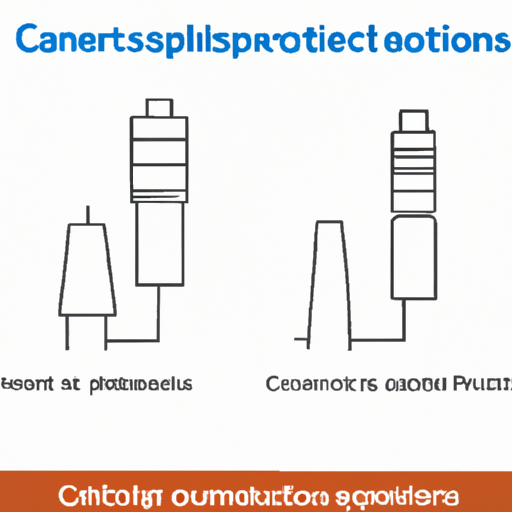
A capacitor consists of three primary components:
1. **Dielectric Material**: This insulating material separates the conductive plates and stores electrical energy. The choice of dielectric affects the capacitor's performance, including its capacitance, voltage rating, and temperature stability.
2. **Conductive Plates**: These plates are responsible for storing electrical charge. The material and surface area of the plates influence the capacitor's capacitance and equivalent series resistance (ESR).
3. **Terminals**: Terminals connect the capacitor to the circuit. They can be leaded or surface-mounted, depending on the application and design requirements.
Capacitors come in various types, each with unique characteristics:
1. **Ceramic Capacitors**: Known for their small size and high stability, ceramic capacitors are widely used in high-frequency applications.
2. **Electrolytic Capacitors**: These capacitors offer high capacitance values and are commonly used in power supply circuits. However, they have polarity and can be less stable than other types.
3. **Film Capacitors**: Film capacitors are known for their reliability and low ESR, making them suitable for audio applications and precision circuits.
4. **Tantalum Capacitors**: These capacitors provide high capacitance in a small package but are more expensive and sensitive to voltage spikes.
The performance of a capacitor is heavily influenced by the selection of its components. Choosing the right dielectric material, conductive plates, and terminals can significantly impact the capacitor's efficiency, lifespan, and suitability for specific applications.
When selecting capacitor components, consider the following electrical characteristics:
1. **Capacitance Value**: This is the measure of a capacitor's ability to store charge. It is essential to choose a capacitance value that meets the requirements of the circuit.
2. **Voltage Rating**: The voltage rating indicates the maximum voltage the capacitor can handle without breaking down. Selecting a capacitor with an appropriate voltage rating is crucial for preventing failure.
3. **Equivalent Series Resistance (ESR)**: ESR affects the efficiency of the capacitor, especially in high-frequency applications. Lower ESR values are generally preferred for better performance.
Physical characteristics also play a vital role in capacitor selection:
1. **Size and Form Factor**: The physical size of the capacitor must fit within the design constraints of the circuit. Smaller capacitors are often preferred for compact designs.
2. **Temperature Stability**: Capacitors can behave differently at various temperatures. Selecting components with suitable temperature coefficients is essential for maintaining performance across operating conditions.
3. **Lifespan and Reliability**: The expected lifespan of a capacitor can vary based on its construction and materials. Reliability is critical, especially in applications where failure can lead to significant issues.
Different applications have unique requirements that influence capacitor selection:
1. **Frequency Response**: Capacitors used in high-frequency applications must have low ESR and suitable dielectric materials to minimize losses.
2. **Environmental Conditions**: Capacitors may be exposed to harsh environments, such as extreme temperatures or humidity. Selecting components rated for these conditions is essential.
3. **Cost Considerations**: Budget constraints can impact component selection. It is important to balance performance and cost to achieve the best value for the application.
1. **Comparison of Common Dielectric Materials**:
- **Ceramic**: Offers high stability and low losses, suitable for high-frequency applications.
- **Film**: Provides excellent reliability and low ESR, ideal for audio and precision circuits.
- **Electrolytic**: High capacitance but less stable; best for power supply applications.
2. **Recommendations Based on Application**:
- For high-frequency applications, ceramic capacitors are recommended due to their low ESR and stability.
- For audio applications, film capacitors are preferred for their sound quality and reliability.
- For power supply circuits, electrolytic capacitors are suitable due to their high capacitance values.
1. **Materials Used for Conductive Plates**:
- **Aluminum**: Commonly used in electrolytic capacitors; offers good conductivity and cost-effectiveness.
- **Tantalum**: Provides high capacitance in a small size but is more expensive and sensitive to voltage spikes.
- **Copper**: Used in some high-performance capacitors for its excellent conductivity.
2. **Recommendations for Specific Applications**:
- For general-purpose applications, aluminum plates are a cost-effective choice.
- For compact designs requiring high capacitance, tantalum plates are recommended.
- For high-performance applications, consider capacitors with copper plates for improved conductivity.
1. **Types of Terminals**:
- **Leaded**: Suitable for through-hole mounting; commonly used in traditional circuit designs.
- **Surface Mount**: Ideal for compact designs and automated assembly processes.
2. **Recommendations for Terminal Types Based on Design Needs**:
- For prototyping and hobby projects, leaded capacitors may be easier to work with.
- For modern, compact designs, surface mount capacitors are recommended for their space-saving benefits.
In high-frequency applications, such as RF circuits, ceramic capacitors are often recommended. Their low ESR and stability make them ideal for filtering and decoupling. For instance, a 100pF C0G ceramic capacitor can effectively filter high-frequency noise while maintaining signal integrity.
For power supply circuits, electrolytic capacitors are commonly used due to their high capacitance values. A 1000µF aluminum electrolytic capacitor can smooth out voltage fluctuations, ensuring stable power delivery. However, it is crucial to select a capacitor with a voltage rating higher than the maximum circuit voltage to prevent failure.
In audio applications, film capacitors are preferred for their low distortion and high reliability. A 1µF polypropylene film capacitor can enhance sound quality in audio circuits, providing clear and accurate reproduction of audio signals.
The capacitor industry is witnessing the development of new materials, such as organic dielectrics and nanomaterials, which promise improved performance and sustainability. These materials may lead to capacitors with higher capacitance values and lower ESR.
As electronic devices become smaller, the demand for compact capacitors is increasing. Miniaturization trends are driving innovations in capacitor design, leading to smaller form factors without compromising performance.
Sustainability is becoming a critical consideration in capacitor manufacturing. Manufacturers are exploring eco-friendly materials and processes to reduce the environmental impact of capacitor production.
Selecting the right capacitor structure components is essential for ensuring optimal performance in electronic circuits. By understanding the various components, their characteristics, and application-specific requirements, engineers and hobbyists can make informed decisions. As technology continues to evolve, staying updated on emerging trends and materials will be crucial for future capacitor applications. We encourage further research and exploration in capacitor technology to harness its full potential in electronic design.
1. "Capacitor Basics: Types, Characteristics, and Applications" - Electronics Tutorials
2. "Understanding Capacitor Specifications" - Digi-Key Electronics
3. "The Role of Capacitors in Power Supply Circuits" - EDN Network
4. "Advancements in Capacitor Technology" - IEEE Xplore
5. "Sustainable Practices in Electronics Manufacturing" - Journal of Cleaner Production
This blog post provides a comprehensive overview of capacitor structure components and offers practical recommendations for selecting similar components based on specific applications. By following these guidelines, readers can enhance their understanding of capacitors and improve their electronic designs.
Capacitors are fundamental components in electronic circuits, serving as energy storage devices that can release energy quickly when needed. They play a crucial role in various applications, from filtering signals in audio equipment to stabilizing voltage in power supply circuits. Understanding the structure of capacitors and the materials used in their construction is essential for selecting the right components for specific applications. This article aims to provide recommendations for similar capacitor structure components, helping engineers and hobbyists make informed decisions.
A capacitor consists of three primary components:
1. **Dielectric Material**: This insulating material separates the conductive plates and stores electrical energy. The choice of dielectric affects the capacitor's performance, including its capacitance, voltage rating, and temperature stability.
2. **Conductive Plates**: These plates are responsible for storing electrical charge. The material and surface area of the plates influence the capacitor's capacitance and equivalent series resistance (ESR).
3. **Terminals**: Terminals connect the capacitor to the circuit. They can be leaded or surface-mounted, depending on the application and design requirements.
Capacitors come in various types, each with unique characteristics:
1. **Ceramic Capacitors**: Known for their small size and high stability, ceramic capacitors are widely used in high-frequency applications.
2. **Electrolytic Capacitors**: These capacitors offer high capacitance values and are commonly used in power supply circuits. However, they have polarity and can be less stable than other types.
3. **Film Capacitors**: Film capacitors are known for their reliability and low ESR, making them suitable for audio applications and precision circuits.
4. **Tantalum Capacitors**: These capacitors provide high capacitance in a small package but are more expensive and sensitive to voltage spikes.
The performance of a capacitor is heavily influenced by the selection of its components. Choosing the right dielectric material, conductive plates, and terminals can significantly impact the capacitor's efficiency, lifespan, and suitability for specific applications.
When selecting capacitor components, consider the following electrical characteristics:
1. **Capacitance Value**: This is the measure of a capacitor's ability to store charge. It is essential to choose a capacitance value that meets the requirements of the circuit.
2. **Voltage Rating**: The voltage rating indicates the maximum voltage the capacitor can handle without breaking down. Selecting a capacitor with an appropriate voltage rating is crucial for preventing failure.
3. **Equivalent Series Resistance (ESR)**: ESR affects the efficiency of the capacitor, especially in high-frequency applications. Lower ESR values are generally preferred for better performance.
Physical characteristics also play a vital role in capacitor selection:
1. **Size and Form Factor**: The physical size of the capacitor must fit within the design constraints of the circuit. Smaller capacitors are often preferred for compact designs.
2. **Temperature Stability**: Capacitors can behave differently at various temperatures. Selecting components with suitable temperature coefficients is essential for maintaining performance across operating conditions.
3. **Lifespan and Reliability**: The expected lifespan of a capacitor can vary based on its construction and materials. Reliability is critical, especially in applications where failure can lead to significant issues.
Different applications have unique requirements that influence capacitor selection:
1. **Frequency Response**: Capacitors used in high-frequency applications must have low ESR and suitable dielectric materials to minimize losses.
2. **Environmental Conditions**: Capacitors may be exposed to harsh environments, such as extreme temperatures or humidity. Selecting components rated for these conditions is essential.
3. **Cost Considerations**: Budget constraints can impact component selection. It is important to balance performance and cost to achieve the best value for the application.
1. **Comparison of Common Dielectric Materials**:
- **Ceramic**: Offers high stability and low losses, suitable for high-frequency applications.
- **Film**: Provides excellent reliability and low ESR, ideal for audio and precision circuits.
- **Electrolytic**: High capacitance but less stable; best for power supply applications.
2. **Recommendations Based on Application**:
- For high-frequency applications, ceramic capacitors are recommended due to their low ESR and stability.
- For audio applications, film capacitors are preferred for their sound quality and reliability.
- For power supply circuits, electrolytic capacitors are suitable due to their high capacitance values.
1. **Materials Used for Conductive Plates**:
- **Aluminum**: Commonly used in electrolytic capacitors; offers good conductivity and cost-effectiveness.
- **Tantalum**: Provides high capacitance in a small size but is more expensive and sensitive to voltage spikes.
- **Copper**: Used in some high-performance capacitors for its excellent conductivity.
2. **Recommendations for Specific Applications**:
- For general-purpose applications, aluminum plates are a cost-effective choice.
- For compact designs requiring high capacitance, tantalum plates are recommended.
- For high-performance applications, consider capacitors with copper plates for improved conductivity.
1. **Types of Terminals**:
- **Leaded**: Suitable for through-hole mounting; commonly used in traditional circuit designs.
- **Surface Mount**: Ideal for compact designs and automated assembly processes.
2. **Recommendations for Terminal Types Based on Design Needs**:
- For prototyping and hobby projects, leaded capacitors may be easier to work with.
- For modern, compact designs, surface mount capacitors are recommended for their space-saving benefits.
In high-frequency applications, such as RF circuits, ceramic capacitors are often recommended. Their low ESR and stability make them ideal for filtering and decoupling. For instance, a 100pF C0G ceramic capacitor can effectively filter high-frequency noise while maintaining signal integrity.
For power supply circuits, electrolytic capacitors are commonly used due to their high capacitance values. A 1000µF aluminum electrolytic capacitor can smooth out voltage fluctuations, ensuring stable power delivery. However, it is crucial to select a capacitor with a voltage rating higher than the maximum circuit voltage to prevent failure.
In audio applications, film capacitors are preferred for their low distortion and high reliability. A 1µF polypropylene film capacitor can enhance sound quality in audio circuits, providing clear and accurate reproduction of audio signals.
The capacitor industry is witnessing the development of new materials, such as organic dielectrics and nanomaterials, which promise improved performance and sustainability. These materials may lead to capacitors with higher capacitance values and lower ESR.
As electronic devices become smaller, the demand for compact capacitors is increasing. Miniaturization trends are driving innovations in capacitor design, leading to smaller form factors without compromising performance.
Sustainability is becoming a critical consideration in capacitor manufacturing. Manufacturers are exploring eco-friendly materials and processes to reduce the environmental impact of capacitor production.
Selecting the right capacitor structure components is essential for ensuring optimal performance in electronic circuits. By understanding the various components, their characteristics, and application-specific requirements, engineers and hobbyists can make informed decisions. As technology continues to evolve, staying updated on emerging trends and materials will be crucial for future capacitor applications. We encourage further research and exploration in capacitor technology to harness its full potential in electronic design.
1. "Capacitor Basics: Types, Characteristics, and Applications" - Electronics Tutorials
2. "Understanding Capacitor Specifications" - Digi-Key Electronics
3. "The Role of Capacitors in Power Supply Circuits" - EDN Network
4. "Advancements in Capacitor Technology" - IEEE Xplore
5. "Sustainable Practices in Electronics Manufacturing" - Journal of Cleaner Production
This blog post provides a comprehensive overview of capacitor structure components and offers practical recommendations for selecting similar components based on specific applications. By following these guidelines, readers can enhance their understanding of capacitors and improve their electronic designs.