取消
Inductors are fundamental components in electrical circuits, serving as passive devices that store energy in a magnetic field when electrical current flows through them. They play a crucial role in various applications, from power supplies to radio frequency (RF) circuits, and are essential for filtering, energy storage, and signal processing. At the heart of every inductor is its core, which significantly influences its performance and efficiency. This blog post will delve into the components and modules that make up the inductor core, exploring their functions and importance in modern electronics.
The core material of an inductor is pivotal in determining its inductance and overall performance. Common core materials include ferrite, iron, and air.
1. **Types of Core Materials**:
- **Ferrite**: Made from a ceramic compound of iron oxide mixed with other metals, ferrite cores are widely used in high-frequency applications due to their high magnetic permeability and low core losses.
- **Iron**: Soft iron cores are often used in low-frequency applications because they provide high inductance but can suffer from significant core losses at higher frequencies.
- **Air**: Air cores are used in applications where low inductance is required, and they exhibit no core losses, making them ideal for RF applications.
2. **Properties of Core Materials Affecting Inductance**: The magnetic permeability of the core material directly affects the inductance value. Higher permeability materials can store more magnetic energy, leading to higher inductance.
Windings are the conductive coils wrapped around the core, and they are essential for creating the magnetic field.
1. **Definition and Purpose of Windings**: Windings consist of insulated wire that forms loops around the core. When current flows through these windings, a magnetic field is generated, which is proportional to the number of turns and the current.
2. **Types of Winding Configurations**:
- **Single-layer**: A single layer of wire is wound around the core, suitable for low inductance applications.
- **Multi-layer**: Multiple layers of wire are wound, increasing the inductance and allowing for more compact designs.
- **Bifilar**: Two wires are wound together, which can help in reducing electromagnetic interference.
Insulation is critical in preventing short circuits and ensuring the safe operation of inductors.
1. **Importance of Insulation**: Proper insulation prevents electrical contact between the windings and the core or between adjacent turns of wire, which could lead to failures.
2. **Common Insulation Materials Used**: Common materials include enamel coatings, plastic films, and paper, each chosen based on the application’s voltage and thermal requirements.
The core itself has several components that influence its performance.
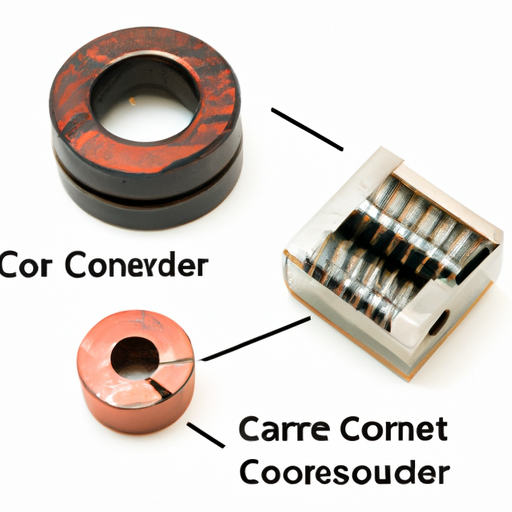
1. **Core Shape and Geometry**: The shape of the core can vary, with common types including toroidal, E-core, and U-core. Each shape has its advantages in terms of magnetic field distribution and efficiency.
2. **Magnetic Permeability and Its Significance**: The magnetic permeability of the core material determines how easily the magnetic field can be established. Higher permeability materials allow for more efficient energy storage.
3. **Core Losses**: Core losses, which include hysteresis and eddy current losses, are critical considerations in inductor design. Hysteresis loss occurs due to the lagging of magnetic domains in the material, while eddy current loss results from induced currents within the core material itself. Minimizing these losses is essential for improving efficiency.
The windings also consist of various components that affect their performance.
1. **Conductor Materials**: Copper and aluminum are the most common materials used for windings. Copper is preferred for its superior conductivity, while aluminum is lighter and less expensive.
2. **Wire Gauge and Its Impact**: The gauge of the wire affects its resistance and current-carrying capacity. Thicker wires can handle more current but may take up more space.
3. **Number of Turns and Its Effect on Inductance**: The inductance of an inductor is directly proportional to the square of the number of turns. More turns increase the magnetic field strength, leading to higher inductance.
Reliable connections are vital for the performance of inductors.
1. **Types of Terminals**: Inductors can have various terminal types, including solder, screw, and snap-fit terminals. The choice depends on the application and assembly process.
2. **Importance of Reliable Connections**: Poor connections can lead to increased resistance, heat generation, and ultimately failure of the inductor.
Magnetic shielding is often necessary to prevent interference from external magnetic fields.
1. **Purpose of Magnetic Shielding**: Shielding helps to maintain the integrity of the inductor's magnetic field and prevents unwanted coupling with nearby components.
2. **Materials and Techniques Used for Shielding**: Common shielding materials include mu-metal and ferrite, which have high magnetic permeability. Techniques may involve enclosing the inductor in a shield or using shielded wire.
Damping components are used to reduce oscillations and improve stability.
1. **Role of Damping**: Damping helps to minimize ringing and oscillations that can occur in inductive circuits, enhancing performance.
2. **Types of Damping Components**: Resistors and capacitors are commonly used for damping. Resistors can be placed in series with the inductor, while capacitors can be used in parallel to filter out high-frequency noise.
Effective thermal management is crucial for maintaining the performance and longevity of inductors.
1. **Importance of Heat Dissipation**: Inductors can generate heat due to resistive losses, and excessive heat can lead to failure. Proper thermal management ensures that the inductor operates within safe temperature limits.
2. **Cooling Techniques and Materials Used**: Techniques such as heat sinks, forced air cooling, and thermal pads can be employed to dissipate heat. Materials with high thermal conductivity are often used to enhance heat transfer.
Inductors are integral to power supply circuits, particularly in switching power supplies.
1. **Role of Inductors in Switching Power Supplies**: Inductors store energy during the on-phase of the switching cycle and release it during the off-phase, smoothing out the output voltage.
2. **Inductor Selection Criteria for Power Applications**: Factors such as inductance value, current rating, and core material must be considered when selecting inductors for power applications.
Inductors are also widely used in RF circuits.
1. **Use of Inductors in Radio Frequency Circuits**: Inductors help in tuning circuits, filtering signals, and impedance matching in RF applications.
2. **Design Considerations for RF Inductors**: RF inductors must be designed to minimize parasitic capacitance and losses, ensuring efficient operation at high frequencies.
Inductors play a crucial role in filtering applications.
1. **Inductors in LC Filters**: Inductors are used in conjunction with capacitors to create LC filters, which can block unwanted frequencies while allowing desired signals to pass.
2. **Importance of Inductance Value in Filtering**: The inductance value must be carefully chosen to achieve the desired cutoff frequency and filter characteristics.
In summary, the components and modules of inductor cores are vital to their performance in various applications. From core materials and winding configurations to magnetic shielding and thermal management, each element plays a significant role in the functionality of inductors. As technology advances, the design and materials used in inductors will continue to evolve, leading to more efficient and compact solutions for modern electronics. Understanding these components is essential for engineers and designers working in the field, as inductors remain a cornerstone of electrical and electronic systems.
1. "Inductor Design and Applications" - Journal of Electrical Engineering
2. "Magnetic Materials and Their Applications" - IEEE Transactions on Magnetics
3. "Power Electronics: Converters, Applications, and Design" - Mohan, Undeland, Robbins
4. "RF Circuit Design: Theory and Applications" - Chris Bowick
5. Online resources from educational institutions and electronics manufacturers.
This comprehensive exploration of inductor cores highlights their complexity and importance in modern electronics, providing a solid foundation for further study and application in various fields.
Inductors are fundamental components in electrical circuits, serving as passive devices that store energy in a magnetic field when electrical current flows through them. They play a crucial role in various applications, from power supplies to radio frequency (RF) circuits, and are essential for filtering, energy storage, and signal processing. At the heart of every inductor is its core, which significantly influences its performance and efficiency. This blog post will delve into the components and modules that make up the inductor core, exploring their functions and importance in modern electronics.
The core material of an inductor is pivotal in determining its inductance and overall performance. Common core materials include ferrite, iron, and air.
1. **Types of Core Materials**:
- **Ferrite**: Made from a ceramic compound of iron oxide mixed with other metals, ferrite cores are widely used in high-frequency applications due to their high magnetic permeability and low core losses.
- **Iron**: Soft iron cores are often used in low-frequency applications because they provide high inductance but can suffer from significant core losses at higher frequencies.
- **Air**: Air cores are used in applications where low inductance is required, and they exhibit no core losses, making them ideal for RF applications.
2. **Properties of Core Materials Affecting Inductance**: The magnetic permeability of the core material directly affects the inductance value. Higher permeability materials can store more magnetic energy, leading to higher inductance.
Windings are the conductive coils wrapped around the core, and they are essential for creating the magnetic field.
1. **Definition and Purpose of Windings**: Windings consist of insulated wire that forms loops around the core. When current flows through these windings, a magnetic field is generated, which is proportional to the number of turns and the current.
2. **Types of Winding Configurations**:
- **Single-layer**: A single layer of wire is wound around the core, suitable for low inductance applications.
- **Multi-layer**: Multiple layers of wire are wound, increasing the inductance and allowing for more compact designs.
- **Bifilar**: Two wires are wound together, which can help in reducing electromagnetic interference.
Insulation is critical in preventing short circuits and ensuring the safe operation of inductors.
1. **Importance of Insulation**: Proper insulation prevents electrical contact between the windings and the core or between adjacent turns of wire, which could lead to failures.
2. **Common Insulation Materials Used**: Common materials include enamel coatings, plastic films, and paper, each chosen based on the application’s voltage and thermal requirements.
The core itself has several components that influence its performance.
1. **Core Shape and Geometry**: The shape of the core can vary, with common types including toroidal, E-core, and U-core. Each shape has its advantages in terms of magnetic field distribution and efficiency.
2. **Magnetic Permeability and Its Significance**: The magnetic permeability of the core material determines how easily the magnetic field can be established. Higher permeability materials allow for more efficient energy storage.
3. **Core Losses**: Core losses, which include hysteresis and eddy current losses, are critical considerations in inductor design. Hysteresis loss occurs due to the lagging of magnetic domains in the material, while eddy current loss results from induced currents within the core material itself. Minimizing these losses is essential for improving efficiency.
The windings also consist of various components that affect their performance.
1. **Conductor Materials**: Copper and aluminum are the most common materials used for windings. Copper is preferred for its superior conductivity, while aluminum is lighter and less expensive.
2. **Wire Gauge and Its Impact**: The gauge of the wire affects its resistance and current-carrying capacity. Thicker wires can handle more current but may take up more space.
3. **Number of Turns and Its Effect on Inductance**: The inductance of an inductor is directly proportional to the square of the number of turns. More turns increase the magnetic field strength, leading to higher inductance.
Reliable connections are vital for the performance of inductors.
1. **Types of Terminals**: Inductors can have various terminal types, including solder, screw, and snap-fit terminals. The choice depends on the application and assembly process.
2. **Importance of Reliable Connections**: Poor connections can lead to increased resistance, heat generation, and ultimately failure of the inductor.
Magnetic shielding is often necessary to prevent interference from external magnetic fields.
1. **Purpose of Magnetic Shielding**: Shielding helps to maintain the integrity of the inductor's magnetic field and prevents unwanted coupling with nearby components.
2. **Materials and Techniques Used for Shielding**: Common shielding materials include mu-metal and ferrite, which have high magnetic permeability. Techniques may involve enclosing the inductor in a shield or using shielded wire.
Damping components are used to reduce oscillations and improve stability.
1. **Role of Damping**: Damping helps to minimize ringing and oscillations that can occur in inductive circuits, enhancing performance.
2. **Types of Damping Components**: Resistors and capacitors are commonly used for damping. Resistors can be placed in series with the inductor, while capacitors can be used in parallel to filter out high-frequency noise.
Effective thermal management is crucial for maintaining the performance and longevity of inductors.
1. **Importance of Heat Dissipation**: Inductors can generate heat due to resistive losses, and excessive heat can lead to failure. Proper thermal management ensures that the inductor operates within safe temperature limits.
2. **Cooling Techniques and Materials Used**: Techniques such as heat sinks, forced air cooling, and thermal pads can be employed to dissipate heat. Materials with high thermal conductivity are often used to enhance heat transfer.
Inductors are integral to power supply circuits, particularly in switching power supplies.
1. **Role of Inductors in Switching Power Supplies**: Inductors store energy during the on-phase of the switching cycle and release it during the off-phase, smoothing out the output voltage.
2. **Inductor Selection Criteria for Power Applications**: Factors such as inductance value, current rating, and core material must be considered when selecting inductors for power applications.
Inductors are also widely used in RF circuits.
1. **Use of Inductors in Radio Frequency Circuits**: Inductors help in tuning circuits, filtering signals, and impedance matching in RF applications.
2. **Design Considerations for RF Inductors**: RF inductors must be designed to minimize parasitic capacitance and losses, ensuring efficient operation at high frequencies.
Inductors play a crucial role in filtering applications.
1. **Inductors in LC Filters**: Inductors are used in conjunction with capacitors to create LC filters, which can block unwanted frequencies while allowing desired signals to pass.
2. **Importance of Inductance Value in Filtering**: The inductance value must be carefully chosen to achieve the desired cutoff frequency and filter characteristics.
In summary, the components and modules of inductor cores are vital to their performance in various applications. From core materials and winding configurations to magnetic shielding and thermal management, each element plays a significant role in the functionality of inductors. As technology advances, the design and materials used in inductors will continue to evolve, leading to more efficient and compact solutions for modern electronics. Understanding these components is essential for engineers and designers working in the field, as inductors remain a cornerstone of electrical and electronic systems.
1. "Inductor Design and Applications" - Journal of Electrical Engineering
2. "Magnetic Materials and Their Applications" - IEEE Transactions on Magnetics
3. "Power Electronics: Converters, Applications, and Design" - Mohan, Undeland, Robbins
4. "RF Circuit Design: Theory and Applications" - Chris Bowick
5. Online resources from educational institutions and electronics manufacturers.
This comprehensive exploration of inductor cores highlights their complexity and importance in modern electronics, providing a solid foundation for further study and application in various fields.