取消
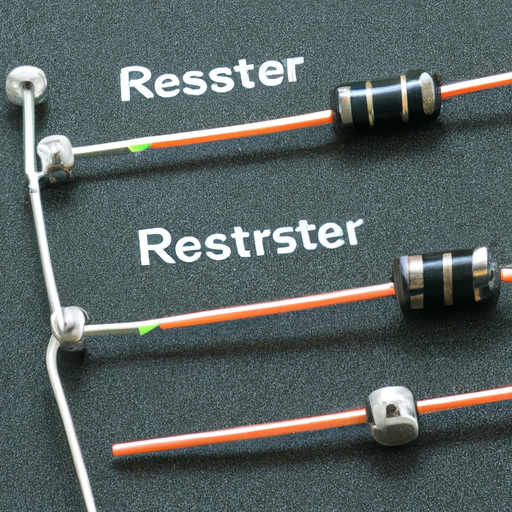
Resistors are fundamental components in electrical circuits that limit the flow of electric current. They are designed to provide a specific amount of resistance, measured in ohms (Ω), which is crucial for controlling the behavior of electrical systems.
Resistors play a vital role in ensuring that electrical devices operate safely and efficiently. By controlling current flow, they protect sensitive components from damage, enable voltage division, and facilitate signal processing. Without resistors, many electronic devices would malfunction or be rendered inoperable.
This article will explore the various types of resistors, the physics behind resistance, how resistors function in circuits, their practical applications, and the importance of understanding resistors in the field of electronics.
A resistor is a passive electrical component that resists the flow of electric current. It is characterized by its resistance value, which determines how much current will flow through it when a voltage is applied.
In an electrical circuit, resistors serve multiple functions, including limiting current, dividing voltage, and dissipating energy in the form of heat. They are essential for controlling the performance of circuits and ensuring that components receive the appropriate voltage and current levels.
Resistors come in various types, each designed for specific applications.
Fixed resistors have a constant resistance value and are widely used in circuits.
a. Carbon Composition Resistors: Made from a mixture of carbon and a binding material, these resistors are inexpensive and suitable for general-purpose applications.
b. Metal Film Resistors: These resistors offer better stability and accuracy than carbon composition resistors, making them ideal for precision applications.
c. Wirewound Resistors: Constructed by winding a metal wire around a ceramic core, wirewound resistors can handle high power levels and are used in high-performance applications.
Variable resistors allow for adjustable resistance values.
a. Potentiometers: These are used to adjust voltage levels in circuits, such as in volume controls for audio equipment.
b. Rheostats: Similar to potentiometers, rheostats are used to control current in a circuit, often in applications requiring high power.
Specialty resistors are designed for specific functions.
a. Thermistors: These resistors change resistance with temperature, making them useful in temperature sensing applications.
b. Photoresistors: Also known as light-dependent resistors (LDRs), these change resistance based on light exposure, commonly used in light-sensing applications.
In circuit diagrams, resistors are represented by a zigzag line or a rectangle, depending on the schematic style. Understanding these symbols is crucial for interpreting circuit designs.
The unit of resistance is the ohm (Ω), named after the German physicist Georg Simon Ohm. One ohm is defined as the resistance that allows one ampere of current to flow when one volt of electrical potential is applied.
Ohm’s Law is a fundamental principle in electronics that relates voltage (V), current (I), and resistance (R). The formula V = IR indicates that the voltage across a resistor is equal to the product of the current flowing through it and its resistance.
Ohm’s Law is essential for analyzing electrical circuits. By knowing any two of the three variables (voltage, current, resistance), one can calculate the third, allowing engineers to design and troubleshoot circuits effectively.
Several factors influence the resistance of a material:
Different materials have varying resistivities. Conductors like copper have low resistance, while insulators like rubber have high resistance.
The resistance of a conductor increases with length and decreases with a larger cross-sectional area. This relationship is described by the formula R = ρ(L/A), where ρ is resistivity, L is length, and A is cross-sectional area.
Resistance typically increases with temperature for most materials. This phenomenon is crucial in applications where temperature variations can affect circuit performance.
Resistivity is a material property that quantifies how strongly a material opposes the flow of electric current. Conductivity, on the other hand, is the ability of a material to conduct electric current, which is the inverse of resistivity.
Understanding resistivity and conductivity is vital for selecting materials for specific applications, ensuring optimal performance and efficiency in electrical circuits.
Resistors are often used to limit the current flowing to sensitive components, preventing damage from excessive current.
By using resistors, engineers can create voltage dividers that provide specific voltage levels to different parts of a circuit.
Resistors can be connected in series or parallel configurations, each affecting the total resistance and current flow differently.
a. Total Resistance Calculation: In a series configuration, the total resistance (R_total) is the sum of individual resistances: R_total = R1 + R2 + R3 + ...
b. Voltage Division: The voltage across each resistor in series can be calculated using the voltage divider rule, which states that the voltage drop across a resistor is proportional to its resistance.
a. Total Resistance Calculation: In a parallel configuration, the total resistance can be calculated using the formula: 1/R_total = 1/R1 + 1/R2 + 1/R3 + ...
b. Current Division: The current flowing through each resistor in parallel is inversely proportional to its resistance, allowing for current division among the resistors.
Power dissipated by a resistor can be calculated using the formula P = IV, where P is power, I is current, and V is voltage. This power is often converted to heat, which must be managed to prevent damage to the resistor.
Resistors generate heat as they dissipate power. Proper thermal management, such as using heat sinks or ensuring adequate airflow, is essential to maintain resistor performance and longevity.
Resistors are ubiquitous in consumer electronics, found in devices like televisions, radios, and computers, where they help regulate current and voltage.
In automotive systems, resistors are used in various applications, including controlling lights, sensors, and electronic control units.
In audio devices, resistors are used to control volume levels and filter signals, ensuring high-quality sound reproduction.
Resistors play a crucial role in communication devices, helping to manage signal levels and prevent distortion.
Thermistors, a type of resistor, are widely used in temperature sensing applications, providing accurate temperature readings for various systems.
Photoresistors are employed in light-sensing applications, such as automatic lighting systems and cameras, adjusting sensitivity based on ambient light levels.
Resistors are essential components in electrical circuits, serving to limit current, divide voltage, and dissipate power. Understanding the different types of resistors, the physics of resistance, and their applications is crucial for anyone working in electronics.
A solid grasp of how resistors function and their role in circuits is vital for designing and troubleshooting electronic systems. This knowledge enables engineers and hobbyists alike to create efficient and reliable devices.
As technology advances, the development of new materials and designs for resistors continues. Innovations such as thin-film resistors and smart resistors that can adapt to changing conditions are on the horizon, promising to enhance the performance and efficiency of electronic devices.
1. "The Art of Electronics" by Paul Horowitz and Winfield Hill
2. "Electronics for Dummies" by Cathleen Shamieh
1. Khan Academy - Electrical Engineering
2. All About Circuits - Resistors and Their Applications
This comprehensive overview of resistors highlights their significance in electrical circuits, providing a foundation for further exploration in the field of electronics. Understanding resistors is not just about knowing their function; it’s about appreciating their role in the intricate dance of electrical engineering.
Resistors are fundamental components in electrical circuits that limit the flow of electric current. They are designed to provide a specific amount of resistance, measured in ohms (Ω), which is crucial for controlling the behavior of electrical systems.
Resistors play a vital role in ensuring that electrical devices operate safely and efficiently. By controlling current flow, they protect sensitive components from damage, enable voltage division, and facilitate signal processing. Without resistors, many electronic devices would malfunction or be rendered inoperable.
This article will explore the various types of resistors, the physics behind resistance, how resistors function in circuits, their practical applications, and the importance of understanding resistors in the field of electronics.
A resistor is a passive electrical component that resists the flow of electric current. It is characterized by its resistance value, which determines how much current will flow through it when a voltage is applied.
In an electrical circuit, resistors serve multiple functions, including limiting current, dividing voltage, and dissipating energy in the form of heat. They are essential for controlling the performance of circuits and ensuring that components receive the appropriate voltage and current levels.
Resistors come in various types, each designed for specific applications.
Fixed resistors have a constant resistance value and are widely used in circuits.
a. Carbon Composition Resistors: Made from a mixture of carbon and a binding material, these resistors are inexpensive and suitable for general-purpose applications.
b. Metal Film Resistors: These resistors offer better stability and accuracy than carbon composition resistors, making them ideal for precision applications.
c. Wirewound Resistors: Constructed by winding a metal wire around a ceramic core, wirewound resistors can handle high power levels and are used in high-performance applications.
Variable resistors allow for adjustable resistance values.
a. Potentiometers: These are used to adjust voltage levels in circuits, such as in volume controls for audio equipment.
b. Rheostats: Similar to potentiometers, rheostats are used to control current in a circuit, often in applications requiring high power.
Specialty resistors are designed for specific functions.
a. Thermistors: These resistors change resistance with temperature, making them useful in temperature sensing applications.
b. Photoresistors: Also known as light-dependent resistors (LDRs), these change resistance based on light exposure, commonly used in light-sensing applications.
In circuit diagrams, resistors are represented by a zigzag line or a rectangle, depending on the schematic style. Understanding these symbols is crucial for interpreting circuit designs.
The unit of resistance is the ohm (Ω), named after the German physicist Georg Simon Ohm. One ohm is defined as the resistance that allows one ampere of current to flow when one volt of electrical potential is applied.
Ohm’s Law is a fundamental principle in electronics that relates voltage (V), current (I), and resistance (R). The formula V = IR indicates that the voltage across a resistor is equal to the product of the current flowing through it and its resistance.
Ohm’s Law is essential for analyzing electrical circuits. By knowing any two of the three variables (voltage, current, resistance), one can calculate the third, allowing engineers to design and troubleshoot circuits effectively.
Several factors influence the resistance of a material:
Different materials have varying resistivities. Conductors like copper have low resistance, while insulators like rubber have high resistance.
The resistance of a conductor increases with length and decreases with a larger cross-sectional area. This relationship is described by the formula R = ρ(L/A), where ρ is resistivity, L is length, and A is cross-sectional area.
Resistance typically increases with temperature for most materials. This phenomenon is crucial in applications where temperature variations can affect circuit performance.
Resistivity is a material property that quantifies how strongly a material opposes the flow of electric current. Conductivity, on the other hand, is the ability of a material to conduct electric current, which is the inverse of resistivity.
Understanding resistivity and conductivity is vital for selecting materials for specific applications, ensuring optimal performance and efficiency in electrical circuits.
Resistors are often used to limit the current flowing to sensitive components, preventing damage from excessive current.
By using resistors, engineers can create voltage dividers that provide specific voltage levels to different parts of a circuit.
Resistors can be connected in series or parallel configurations, each affecting the total resistance and current flow differently.
a. Total Resistance Calculation: In a series configuration, the total resistance (R_total) is the sum of individual resistances: R_total = R1 + R2 + R3 + ...
b. Voltage Division: The voltage across each resistor in series can be calculated using the voltage divider rule, which states that the voltage drop across a resistor is proportional to its resistance.
a. Total Resistance Calculation: In a parallel configuration, the total resistance can be calculated using the formula: 1/R_total = 1/R1 + 1/R2 + 1/R3 + ...
b. Current Division: The current flowing through each resistor in parallel is inversely proportional to its resistance, allowing for current division among the resistors.
Power dissipated by a resistor can be calculated using the formula P = IV, where P is power, I is current, and V is voltage. This power is often converted to heat, which must be managed to prevent damage to the resistor.
Resistors generate heat as they dissipate power. Proper thermal management, such as using heat sinks or ensuring adequate airflow, is essential to maintain resistor performance and longevity.
Resistors are ubiquitous in consumer electronics, found in devices like televisions, radios, and computers, where they help regulate current and voltage.
In automotive systems, resistors are used in various applications, including controlling lights, sensors, and electronic control units.
In audio devices, resistors are used to control volume levels and filter signals, ensuring high-quality sound reproduction.
Resistors play a crucial role in communication devices, helping to manage signal levels and prevent distortion.
Thermistors, a type of resistor, are widely used in temperature sensing applications, providing accurate temperature readings for various systems.
Photoresistors are employed in light-sensing applications, such as automatic lighting systems and cameras, adjusting sensitivity based on ambient light levels.
Resistors are essential components in electrical circuits, serving to limit current, divide voltage, and dissipate power. Understanding the different types of resistors, the physics of resistance, and their applications is crucial for anyone working in electronics.
A solid grasp of how resistors function and their role in circuits is vital for designing and troubleshooting electronic systems. This knowledge enables engineers and hobbyists alike to create efficient and reliable devices.
As technology advances, the development of new materials and designs for resistors continues. Innovations such as thin-film resistors and smart resistors that can adapt to changing conditions are on the horizon, promising to enhance the performance and efficiency of electronic devices.
1. "The Art of Electronics" by Paul Horowitz and Winfield Hill
2. "Electronics for Dummies" by Cathleen Shamieh
1. Khan Academy - Electrical Engineering
2. All About Circuits - Resistors and Their Applications
This comprehensive overview of resistors highlights their significance in electrical circuits, providing a foundation for further exploration in the field of electronics. Understanding resistors is not just about knowing their function; it’s about appreciating their role in the intricate dance of electrical engineering.