取消
Capacitors are fundamental components in electronic circuits, serving as energy storage devices that can release energy when needed. They play a crucial role in various applications, from filtering signals to stabilizing voltage levels. Understanding the differences between mainstream capacitors and capacitor models is essential for engineers and designers who aim to create efficient and reliable electronic systems. This blog post will explore the characteristics, applications, and implications of both mainstream capacitors and capacitor models, highlighting their unique roles in the world of electronics.
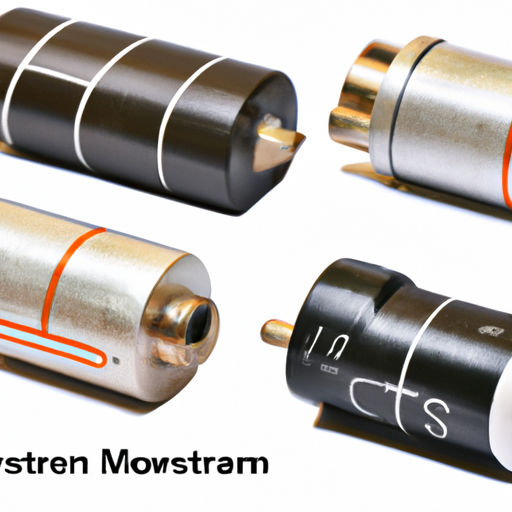
Mainstream capacitors are physical components that store electrical energy in an electric field. They come in various types, each with distinct characteristics suited for specific applications. The most common types include:
1. **Ceramic Capacitors**: Known for their small size and high stability, ceramic capacitors are widely used in high-frequency applications. They are non-polarized and can handle a range of capacitance values.
2. **Electrolytic Capacitors**: These capacitors are polarized and typically used for larger capacitance values. They are commonly found in power supply circuits due to their ability to store significant amounts of energy.
3. **Film Capacitors**: Made from thin plastic films, these capacitors offer excellent stability and low losses. They are often used in audio applications and precision circuits.
4. **Tantalum Capacitors**: Known for their high capacitance-to-volume ratio, tantalum capacitors are used in compact electronic devices. They are also polarized and can be sensitive to voltage spikes.
Key specifications for mainstream capacitors include capacitance (measured in farads), voltage rating (the maximum voltage the capacitor can handle), and tolerance (the allowable deviation from the nominal capacitance value).
Mainstream capacitors find applications across various sectors:
1. **Consumer Electronics**: From smartphones to televisions, capacitors are integral to the functioning of everyday devices, helping to filter signals and stabilize power supplies.
2. **Industrial Applications**: In industrial settings, capacitors are used in motor drives, power factor correction, and energy storage systems, contributing to efficiency and reliability.
3. **Power Supply Circuits**: Capacitors are essential in power supply circuits, where they smooth out voltage fluctuations and provide energy during peak demands.
Mainstream capacitors offer several advantages:
1. **Cost-Effectiveness**: They are generally affordable and widely available, making them accessible for various applications.
2. **Availability**: With numerous manufacturers producing capacitors, sourcing them is relatively easy.
However, they also have limitations:
1. **Performance Constraints**: Different types of capacitors have specific performance characteristics that may not suit all applications. For instance, electrolytic capacitors can have high leakage currents.
2. **Size and Weight**: Some capacitors, particularly electrolytic and tantalum types, can be bulky, which may be a concern in compact designs.
Capacitor models are theoretical representations used to simulate and analyze the behavior of capacitors in electronic circuits. They serve as essential tools for engineers and designers, allowing them to predict how capacitors will perform under various conditions.
1. **Simulation and Design Tools**: Capacitor models are integrated into circuit simulation software, enabling designers to test and optimize their designs before physical implementation.
2. **Mathematical Representations**: These models provide mathematical equations that describe the behavior of capacitors, including their response to voltage changes and frequency variations.
Capacitor models can be categorized into several types:
1. **Ideal Capacitor Model**: This model assumes a perfect capacitor with no losses, infinite lifespan, and instantaneous response to voltage changes. While useful for basic calculations, it does not account for real-world behaviors.
2. **Non-Ideal Capacitor Models**: These models incorporate factors such as equivalent series resistance (ESR) and leakage current, which affect the performance of real capacitors. They provide a more accurate representation of how capacitors behave in practical applications.
3. **Advanced Models**: Some capacitor models account for frequency-dependent behavior, which is crucial for high-frequency applications. These models help predict how capacitors will perform under varying frequencies, enabling better design choices.
Capacitor models are widely used in various applications:
1. **Circuit Simulation Software**: Tools like SPICE and MATLAB utilize capacitor models to simulate circuit behavior, allowing engineers to analyze performance before building physical prototypes.
2. **Design Optimization**: By using capacitor models, designers can optimize their circuits for efficiency, reliability, and performance, reducing the need for costly iterations.
3. **Predictive Analysis in Engineering**: Capacitor models enable engineers to predict how changes in design or component specifications will impact overall circuit performance, facilitating informed decision-making.
One of the most significant differences between mainstream capacitors and capacitor models is their nature:
1. **Tangibility of Mainstream Capacitors**: Mainstream capacitors are physical components that can be seen, touched, and measured. They have specific characteristics that can be tested and validated in real-world applications.
2. **Abstract Nature of Capacitor Models**: In contrast, capacitor models are theoretical constructs that represent the behavior of capacitors. They exist in the realm of mathematics and simulation, providing insights into performance without being tangible.
The functionality of mainstream capacitors and capacitor models also differs:
1. **Real-World Performance of Mainstream Capacitors**: Mainstream capacitors exhibit real-world behaviors, including losses, temperature sensitivity, and aging effects. Their performance can vary based on environmental conditions and manufacturing quality.
2. **Predictive Capabilities of Capacitor Models**: Capacitor models, on the other hand, are designed to predict how capacitors will behave under specific conditions. They can help identify potential issues before they arise in physical circuits.
The design and testing processes for mainstream capacitors and capacitor models are distinct:
1. **Manufacturing and Quality Control of Mainstream Capacitors**: Mainstream capacitors undergo rigorous manufacturing processes and quality control measures to ensure they meet specified standards. This includes testing for capacitance, voltage rating, and reliability.
2. **Validation and Calibration of Capacitor Models**: Capacitor models require validation against real-world data to ensure their accuracy. Engineers must calibrate these models based on empirical measurements to enhance their predictive capabilities.
The economic factors associated with mainstream capacitors and capacitor models also differ:
1. **Economic Factors in Sourcing Mainstream Capacitors**: The cost of mainstream capacitors can vary based on type, specifications, and market demand. Engineers must consider these factors when sourcing components for their designs.
2. **Investment in Software and Training for Capacitor Modeling**: Developing and utilizing capacitor models often requires investment in simulation software and training for engineers. This can represent a significant cost, especially for smaller organizations.
Understanding both mainstream capacitors and capacitor models is crucial for effective circuit design. By recognizing the strengths and limitations of each, engineers can make informed decisions that enhance the reliability and performance of their designs. Bridging the gap between theory and practice allows for more innovative solutions and improved outcomes in electronic systems.
In summary, mainstream capacitors and capacitor models serve distinct yet complementary roles in the field of electronics. While mainstream capacitors are tangible components with specific characteristics and applications, capacitor models provide theoretical insights that aid in design and analysis. Both are essential for creating efficient and reliable electronic circuits. As technology continues to evolve, further exploration and study in capacitor technology and modeling techniques will be vital for engineers and designers seeking to push the boundaries of innovation.
A. Suggested readings and resources for further understanding:
1. "Capacitors: Technology and Applications" by John Smith
2. "Electronic Components: A Complete Reference" by Jane Doe
B. Relevant academic papers and industry standards on capacitors and modeling techniques:
1. IEEE Standards for Capacitor Testing
2. Journal of Electronic Materials - Special Issue on Capacitor Technology
By understanding the differences between mainstream capacitors and capacitor models, engineers can better navigate the complexities of electronic design, leading to more effective and innovative solutions in the ever-evolving world of technology.
Capacitors are fundamental components in electronic circuits, serving as energy storage devices that can release energy when needed. They play a crucial role in various applications, from filtering signals to stabilizing voltage levels. Understanding the differences between mainstream capacitors and capacitor models is essential for engineers and designers who aim to create efficient and reliable electronic systems. This blog post will explore the characteristics, applications, and implications of both mainstream capacitors and capacitor models, highlighting their unique roles in the world of electronics.
Mainstream capacitors are physical components that store electrical energy in an electric field. They come in various types, each with distinct characteristics suited for specific applications. The most common types include:
1. **Ceramic Capacitors**: Known for their small size and high stability, ceramic capacitors are widely used in high-frequency applications. They are non-polarized and can handle a range of capacitance values.
2. **Electrolytic Capacitors**: These capacitors are polarized and typically used for larger capacitance values. They are commonly found in power supply circuits due to their ability to store significant amounts of energy.
3. **Film Capacitors**: Made from thin plastic films, these capacitors offer excellent stability and low losses. They are often used in audio applications and precision circuits.
4. **Tantalum Capacitors**: Known for their high capacitance-to-volume ratio, tantalum capacitors are used in compact electronic devices. They are also polarized and can be sensitive to voltage spikes.
Key specifications for mainstream capacitors include capacitance (measured in farads), voltage rating (the maximum voltage the capacitor can handle), and tolerance (the allowable deviation from the nominal capacitance value).
Mainstream capacitors find applications across various sectors:
1. **Consumer Electronics**: From smartphones to televisions, capacitors are integral to the functioning of everyday devices, helping to filter signals and stabilize power supplies.
2. **Industrial Applications**: In industrial settings, capacitors are used in motor drives, power factor correction, and energy storage systems, contributing to efficiency and reliability.
3. **Power Supply Circuits**: Capacitors are essential in power supply circuits, where they smooth out voltage fluctuations and provide energy during peak demands.
Mainstream capacitors offer several advantages:
1. **Cost-Effectiveness**: They are generally affordable and widely available, making them accessible for various applications.
2. **Availability**: With numerous manufacturers producing capacitors, sourcing them is relatively easy.
However, they also have limitations:
1. **Performance Constraints**: Different types of capacitors have specific performance characteristics that may not suit all applications. For instance, electrolytic capacitors can have high leakage currents.
2. **Size and Weight**: Some capacitors, particularly electrolytic and tantalum types, can be bulky, which may be a concern in compact designs.
Capacitor models are theoretical representations used to simulate and analyze the behavior of capacitors in electronic circuits. They serve as essential tools for engineers and designers, allowing them to predict how capacitors will perform under various conditions.
1. **Simulation and Design Tools**: Capacitor models are integrated into circuit simulation software, enabling designers to test and optimize their designs before physical implementation.
2. **Mathematical Representations**: These models provide mathematical equations that describe the behavior of capacitors, including their response to voltage changes and frequency variations.
Capacitor models can be categorized into several types:
1. **Ideal Capacitor Model**: This model assumes a perfect capacitor with no losses, infinite lifespan, and instantaneous response to voltage changes. While useful for basic calculations, it does not account for real-world behaviors.
2. **Non-Ideal Capacitor Models**: These models incorporate factors such as equivalent series resistance (ESR) and leakage current, which affect the performance of real capacitors. They provide a more accurate representation of how capacitors behave in practical applications.
3. **Advanced Models**: Some capacitor models account for frequency-dependent behavior, which is crucial for high-frequency applications. These models help predict how capacitors will perform under varying frequencies, enabling better design choices.
Capacitor models are widely used in various applications:
1. **Circuit Simulation Software**: Tools like SPICE and MATLAB utilize capacitor models to simulate circuit behavior, allowing engineers to analyze performance before building physical prototypes.
2. **Design Optimization**: By using capacitor models, designers can optimize their circuits for efficiency, reliability, and performance, reducing the need for costly iterations.
3. **Predictive Analysis in Engineering**: Capacitor models enable engineers to predict how changes in design or component specifications will impact overall circuit performance, facilitating informed decision-making.
One of the most significant differences between mainstream capacitors and capacitor models is their nature:
1. **Tangibility of Mainstream Capacitors**: Mainstream capacitors are physical components that can be seen, touched, and measured. They have specific characteristics that can be tested and validated in real-world applications.
2. **Abstract Nature of Capacitor Models**: In contrast, capacitor models are theoretical constructs that represent the behavior of capacitors. They exist in the realm of mathematics and simulation, providing insights into performance without being tangible.
The functionality of mainstream capacitors and capacitor models also differs:
1. **Real-World Performance of Mainstream Capacitors**: Mainstream capacitors exhibit real-world behaviors, including losses, temperature sensitivity, and aging effects. Their performance can vary based on environmental conditions and manufacturing quality.
2. **Predictive Capabilities of Capacitor Models**: Capacitor models, on the other hand, are designed to predict how capacitors will behave under specific conditions. They can help identify potential issues before they arise in physical circuits.
The design and testing processes for mainstream capacitors and capacitor models are distinct:
1. **Manufacturing and Quality Control of Mainstream Capacitors**: Mainstream capacitors undergo rigorous manufacturing processes and quality control measures to ensure they meet specified standards. This includes testing for capacitance, voltage rating, and reliability.
2. **Validation and Calibration of Capacitor Models**: Capacitor models require validation against real-world data to ensure their accuracy. Engineers must calibrate these models based on empirical measurements to enhance their predictive capabilities.
The economic factors associated with mainstream capacitors and capacitor models also differ:
1. **Economic Factors in Sourcing Mainstream Capacitors**: The cost of mainstream capacitors can vary based on type, specifications, and market demand. Engineers must consider these factors when sourcing components for their designs.
2. **Investment in Software and Training for Capacitor Modeling**: Developing and utilizing capacitor models often requires investment in simulation software and training for engineers. This can represent a significant cost, especially for smaller organizations.
Understanding both mainstream capacitors and capacitor models is crucial for effective circuit design. By recognizing the strengths and limitations of each, engineers can make informed decisions that enhance the reliability and performance of their designs. Bridging the gap between theory and practice allows for more innovative solutions and improved outcomes in electronic systems.
In summary, mainstream capacitors and capacitor models serve distinct yet complementary roles in the field of electronics. While mainstream capacitors are tangible components with specific characteristics and applications, capacitor models provide theoretical insights that aid in design and analysis. Both are essential for creating efficient and reliable electronic circuits. As technology continues to evolve, further exploration and study in capacitor technology and modeling techniques will be vital for engineers and designers seeking to push the boundaries of innovation.
A. Suggested readings and resources for further understanding:
1. "Capacitors: Technology and Applications" by John Smith
2. "Electronic Components: A Complete Reference" by Jane Doe
B. Relevant academic papers and industry standards on capacitors and modeling techniques:
1. IEEE Standards for Capacitor Testing
2. Journal of Electronic Materials - Special Issue on Capacitor Technology
By understanding the differences between mainstream capacitors and capacitor models, engineers can better navigate the complexities of electronic design, leading to more effective and innovative solutions in the ever-evolving world of technology.