取消
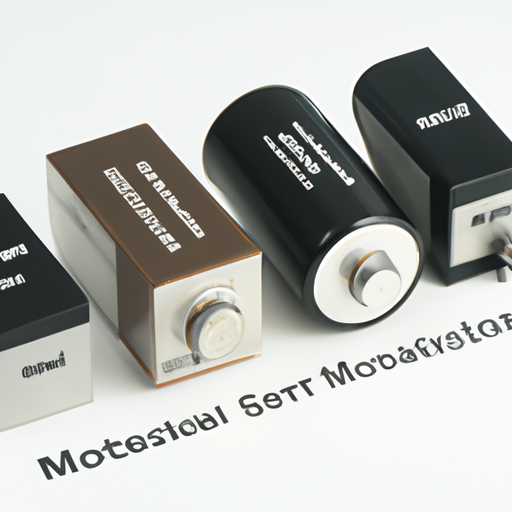
Capacitors are fundamental components in electronic circuits, serving as energy storage devices that can release energy when needed. They play a crucial role in various applications, from filtering signals to stabilizing voltage levels. Understanding the differences between mainstream capacitor models is essential for engineers and hobbyists alike, as the choice of capacitor can significantly impact the performance and reliability of electronic devices. This article aims to explore the various types of capacitors, their characteristics, and the key differences that influence their applications.
Electrolytic capacitors are polarized capacitors that use an electrolyte to achieve a larger capacitance value in a smaller package. They are typically constructed with an aluminum or tantalum anode and a dielectric layer formed by oxidation.
**Characteristics and Applications:**
Electrolytic capacitors are known for their high capacitance values, often ranging from microfarads (µF) to millifarads (mF). They are widely used in power supply circuits, audio equipment, and decoupling applications due to their ability to handle high ripple currents. However, they have a limited voltage rating and can be sensitive to temperature variations.
Ceramic capacitors are non-polarized capacitors made from ceramic materials. They are available in various classes, with Class 1 capacitors offering stable capacitance and Class 2 capacitors providing higher capacitance values but with less stability.
**Characteristics and Applications:**
Ceramic capacitors are known for their small size, low equivalent series resistance (ESR), and excellent frequency response. They are commonly used in high-frequency applications, such as RF circuits, decoupling, and filtering. Their capacitance values typically range from picofarads (pF) to microfarads (µF).
Film capacitors are constructed using thin plastic films as the dielectric material. They can be made from various materials, including polyester, polypropylene, and polycarbonate.
**Characteristics and Applications:**
Film capacitors are known for their stability, low ESR, and high insulation resistance. They are often used in applications requiring precision, such as timing circuits, audio equipment, and power electronics. Their capacitance values generally range from nanofarads (nF) to microfarads (µF).
Tantalum capacitors are another type of electrolytic capacitor, but they use tantalum metal as the anode. They are known for their compact size and high capacitance values.
**Characteristics and Applications:**
Tantalum capacitors offer excellent stability and reliability, making them suitable for applications in telecommunications, automotive electronics, and medical devices. They typically have capacitance values ranging from microfarads (µF) to hundreds of microfarads (µF) and can handle higher voltage ratings compared to standard electrolytic capacitors.
Supercapacitors, also known as ultracapacitors, are energy storage devices that bridge the gap between traditional capacitors and batteries. They store energy through electrostatic charge rather than chemical reactions.
**Characteristics and Applications:**
Supercapacitors have extremely high capacitance values, often in the farad (F) range, and can deliver rapid bursts of energy. They are commonly used in applications requiring quick charge and discharge cycles, such as energy harvesting, backup power supplies, and electric vehicles.
The capacitance range varies significantly among different capacitor types. Electrolytic capacitors typically offer the highest capacitance values, making them suitable for bulk energy storage. In contrast, ceramic capacitors are favored for high-frequency applications due to their lower capacitance values but superior performance characteristics.
Voltage ratings are critical when selecting capacitors for specific applications. Electrolytic capacitors generally have lower voltage ratings compared to ceramic and film capacitors. Tantalum capacitors can handle higher voltages but are still limited compared to ceramic types. Understanding the voltage requirements of a circuit is essential to prevent capacitor failure.
Equivalent Series Resistance (ESR) is a crucial parameter that affects the performance of capacitors, particularly in high-frequency applications. Ceramic capacitors typically exhibit low ESR, making them ideal for decoupling and filtering applications. In contrast, electrolytic capacitors have higher ESR, which can lead to power loss and heat generation in certain applications.
Temperature stability is another important factor to consider. Ceramic capacitors, especially Class 1 types, offer excellent temperature stability, while Class 2 capacitors may experience significant capacitance changes with temperature fluctuations. Electrolytic capacitors are more sensitive to temperature and can degrade over time if exposed to extreme conditions.
The expected lifespan and reliability of capacitors vary by type. Electrolytic capacitors generally have a shorter lifespan due to their electrolyte content, which can dry out over time. In contrast, film and ceramic capacitors are known for their longevity and reliability, making them suitable for critical applications. Tantalum capacitors offer a good balance of reliability and performance but can fail catastrophically if subjected to overvoltage conditions.
In consumer electronics, ceramic and electrolytic capacitors are commonly used. Ceramic capacitors are favored for their small size and low ESR, making them ideal for decoupling and filtering applications in smartphones, tablets, and laptops. Electrolytic capacitors are often found in power supply circuits due to their high capacitance values.
In industrial settings, film capacitors are often preferred for their stability and reliability. They are used in motor drives, power supplies, and control circuits. Tantalum capacitors are also utilized in applications requiring compact size and high capacitance, such as telecommunications equipment.
The automotive industry has specific capacitor requirements due to the harsh operating conditions. Tantalum and ceramic capacitors are commonly used in automotive electronics, including engine control units and infotainment systems. Their ability to withstand temperature variations and vibrations makes them suitable for these applications.
Capacitors play a vital role in renewable energy systems, such as solar and wind energy. Supercapacitors are increasingly being used for energy storage in these applications due to their ability to deliver quick bursts of energy and their long cycle life. Film and electrolytic capacitors are also used for filtering and smoothing voltage fluctuations in power inverters.
In summary, understanding the differences between mainstream capacitor models is essential for selecting the right component for specific applications. Each type of capacitor has its unique characteristics, advantages, and limitations, making them suitable for various electronic circuits. As technology continues to evolve, advancements in capacitor technology will likely lead to new materials and designs, further enhancing their performance and reliability in diverse applications.
1. "Capacitor Basics: Types and Applications." Electronics Tutorials.
2. "Understanding Capacitor Specifications." Digi-Key Electronics.
3. "The Role of Capacitors in Renewable Energy Systems." IEEE Spectrum.
4. "Capacitor Selection Guide." Mouser Electronics.
5. "Advancements in Capacitor Technology." Journal of Electronic Materials.
This blog post provides a comprehensive overview of the differences between mainstream capacitor models, helping readers make informed decisions when selecting capacitors for their electronic projects.
Capacitors are fundamental components in electronic circuits, serving as energy storage devices that can release energy when needed. They play a crucial role in various applications, from filtering signals to stabilizing voltage levels. Understanding the differences between mainstream capacitor models is essential for engineers and hobbyists alike, as the choice of capacitor can significantly impact the performance and reliability of electronic devices. This article aims to explore the various types of capacitors, their characteristics, and the key differences that influence their applications.
Electrolytic capacitors are polarized capacitors that use an electrolyte to achieve a larger capacitance value in a smaller package. They are typically constructed with an aluminum or tantalum anode and a dielectric layer formed by oxidation.
**Characteristics and Applications:**
Electrolytic capacitors are known for their high capacitance values, often ranging from microfarads (µF) to millifarads (mF). They are widely used in power supply circuits, audio equipment, and decoupling applications due to their ability to handle high ripple currents. However, they have a limited voltage rating and can be sensitive to temperature variations.
Ceramic capacitors are non-polarized capacitors made from ceramic materials. They are available in various classes, with Class 1 capacitors offering stable capacitance and Class 2 capacitors providing higher capacitance values but with less stability.
**Characteristics and Applications:**
Ceramic capacitors are known for their small size, low equivalent series resistance (ESR), and excellent frequency response. They are commonly used in high-frequency applications, such as RF circuits, decoupling, and filtering. Their capacitance values typically range from picofarads (pF) to microfarads (µF).
Film capacitors are constructed using thin plastic films as the dielectric material. They can be made from various materials, including polyester, polypropylene, and polycarbonate.
**Characteristics and Applications:**
Film capacitors are known for their stability, low ESR, and high insulation resistance. They are often used in applications requiring precision, such as timing circuits, audio equipment, and power electronics. Their capacitance values generally range from nanofarads (nF) to microfarads (µF).
Tantalum capacitors are another type of electrolytic capacitor, but they use tantalum metal as the anode. They are known for their compact size and high capacitance values.
**Characteristics and Applications:**
Tantalum capacitors offer excellent stability and reliability, making them suitable for applications in telecommunications, automotive electronics, and medical devices. They typically have capacitance values ranging from microfarads (µF) to hundreds of microfarads (µF) and can handle higher voltage ratings compared to standard electrolytic capacitors.
Supercapacitors, also known as ultracapacitors, are energy storage devices that bridge the gap between traditional capacitors and batteries. They store energy through electrostatic charge rather than chemical reactions.
**Characteristics and Applications:**
Supercapacitors have extremely high capacitance values, often in the farad (F) range, and can deliver rapid bursts of energy. They are commonly used in applications requiring quick charge and discharge cycles, such as energy harvesting, backup power supplies, and electric vehicles.
The capacitance range varies significantly among different capacitor types. Electrolytic capacitors typically offer the highest capacitance values, making them suitable for bulk energy storage. In contrast, ceramic capacitors are favored for high-frequency applications due to their lower capacitance values but superior performance characteristics.
Voltage ratings are critical when selecting capacitors for specific applications. Electrolytic capacitors generally have lower voltage ratings compared to ceramic and film capacitors. Tantalum capacitors can handle higher voltages but are still limited compared to ceramic types. Understanding the voltage requirements of a circuit is essential to prevent capacitor failure.
Equivalent Series Resistance (ESR) is a crucial parameter that affects the performance of capacitors, particularly in high-frequency applications. Ceramic capacitors typically exhibit low ESR, making them ideal for decoupling and filtering applications. In contrast, electrolytic capacitors have higher ESR, which can lead to power loss and heat generation in certain applications.
Temperature stability is another important factor to consider. Ceramic capacitors, especially Class 1 types, offer excellent temperature stability, while Class 2 capacitors may experience significant capacitance changes with temperature fluctuations. Electrolytic capacitors are more sensitive to temperature and can degrade over time if exposed to extreme conditions.
The expected lifespan and reliability of capacitors vary by type. Electrolytic capacitors generally have a shorter lifespan due to their electrolyte content, which can dry out over time. In contrast, film and ceramic capacitors are known for their longevity and reliability, making them suitable for critical applications. Tantalum capacitors offer a good balance of reliability and performance but can fail catastrophically if subjected to overvoltage conditions.
In consumer electronics, ceramic and electrolytic capacitors are commonly used. Ceramic capacitors are favored for their small size and low ESR, making them ideal for decoupling and filtering applications in smartphones, tablets, and laptops. Electrolytic capacitors are often found in power supply circuits due to their high capacitance values.
In industrial settings, film capacitors are often preferred for their stability and reliability. They are used in motor drives, power supplies, and control circuits. Tantalum capacitors are also utilized in applications requiring compact size and high capacitance, such as telecommunications equipment.
The automotive industry has specific capacitor requirements due to the harsh operating conditions. Tantalum and ceramic capacitors are commonly used in automotive electronics, including engine control units and infotainment systems. Their ability to withstand temperature variations and vibrations makes them suitable for these applications.
Capacitors play a vital role in renewable energy systems, such as solar and wind energy. Supercapacitors are increasingly being used for energy storage in these applications due to their ability to deliver quick bursts of energy and their long cycle life. Film and electrolytic capacitors are also used for filtering and smoothing voltage fluctuations in power inverters.
In summary, understanding the differences between mainstream capacitor models is essential for selecting the right component for specific applications. Each type of capacitor has its unique characteristics, advantages, and limitations, making them suitable for various electronic circuits. As technology continues to evolve, advancements in capacitor technology will likely lead to new materials and designs, further enhancing their performance and reliability in diverse applications.
1. "Capacitor Basics: Types and Applications." Electronics Tutorials.
2. "Understanding Capacitor Specifications." Digi-Key Electronics.
3. "The Role of Capacitors in Renewable Energy Systems." IEEE Spectrum.
4. "Capacitor Selection Guide." Mouser Electronics.
5. "Advancements in Capacitor Technology." Journal of Electronic Materials.
This blog post provides a comprehensive overview of the differences between mainstream capacitor models, helping readers make informed decisions when selecting capacitors for their electronic projects.