取消
Capacitors are passive electronic components that store and release electrical energy in a circuit. They consist of two conductive plates separated by an insulating material known as a dielectric. When a voltage is applied across the plates, an electric field is created, allowing the capacitor to store energy. This stored energy can be released when needed, making capacitors essential in various electronic applications.
Capacitors play a crucial role in modern electronics. They are used in power supply circuits to smooth out voltage fluctuations, in timing circuits to create precise time delays, and in signal processing to filter out unwanted frequencies. Their ability to store and release energy quickly makes them invaluable in applications ranging from consumer electronics to industrial machinery.
This article will explore the various components and modules involved in capacitor applications. We will discuss the types of capacitors, supporting components, modules that utilize capacitors, advanced applications, and design considerations. By the end, readers will have a comprehensive understanding of how capacitors function within electronic systems.
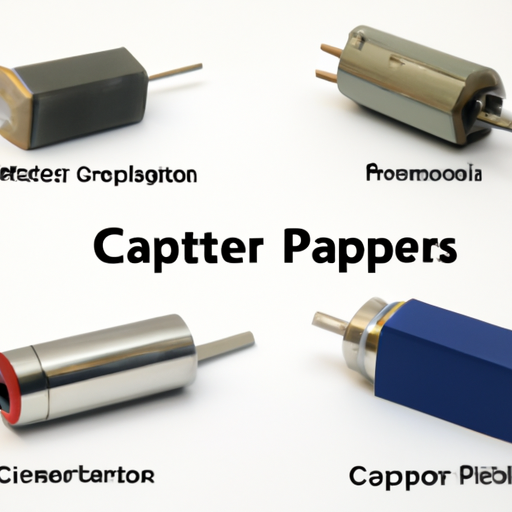
Capacitors come in various types, each suited for specific applications:
1. **Electrolytic Capacitors**: These capacitors are polarized and typically used for high-capacitance applications, such as power supply filtering. They have a larger capacitance value compared to other types but are limited in voltage ratings.
2. **Ceramic Capacitors**: Known for their stability and reliability, ceramic capacitors are non-polarized and are commonly used in high-frequency applications. They are available in various capacitance values and voltage ratings.
3. **Film Capacitors**: These capacitors use a thin plastic film as the dielectric. They are known for their low loss and high stability, making them suitable for audio and high-frequency applications.
4. **Tantalum Capacitors**: Tantalum capacitors are known for their small size and high capacitance. They are often used in compact electronic devices but require careful handling due to their sensitivity to voltage and temperature.
5. **Supercapacitors**: Also known as ultracapacitors, these devices can store a large amount of energy and are used in applications requiring rapid charge and discharge cycles, such as energy storage systems.
Understanding capacitor ratings is essential for selecting the right component for an application:
1. **Capacitance Value**: Measured in farads (F), this value indicates the amount of charge a capacitor can store. It is crucial to choose a capacitor with the appropriate capacitance for the specific application.
2. **Voltage Rating**: This rating indicates the maximum voltage a capacitor can handle without breaking down. Exceeding this voltage can lead to failure.
3. **Tolerance**: This specification indicates how much the actual capacitance can vary from the stated value. Tighter tolerances are often required in precision applications.
4. **Temperature Coefficient**: This rating indicates how the capacitance value changes with temperature. It is important for applications that experience significant temperature variations.
Capacitors often work in conjunction with other components to achieve desired circuit functionality.
1. **Role in RC Circuits**: Resistors are commonly paired with capacitors in RC (resistor-capacitor) circuits to create time delays and filter signals. The resistor controls the charge and discharge rate of the capacitor.
2. **Types of Resistors Used**: Various types of resistors, such as carbon film, metal film, and wire-wound resistors, can be used depending on the application requirements.
1. **Function in LC Circuits**: Inductors, when combined with capacitors in LC (inductor-capacitor) circuits, can create resonant circuits that are essential in radio frequency applications.
2. **Types of Inductors**: Inductors come in various forms, including air-core, iron-core, and ferrite-core inductors, each suited for different applications.
1. **Importance in Rectification**: Diodes are used in conjunction with capacitors in power supply circuits to convert alternating current (AC) to direct current (DC). They allow current to flow in one direction, charging the capacitor.
2. **Types of Diodes Used**: Common types include standard rectifier diodes, Schottky diodes, and Zener diodes, each serving specific functions in circuits.
1. **Role in Amplification and Switching**: Transistors are used to amplify signals and switch circuits on and off. They often work with capacitors in timing and signal processing applications.
2. **Types of Transistors**: Bipolar junction transistors (BJTs) and field-effect transistors (FETs) are commonly used in various electronic circuits.
Capacitors are integral to many electronic modules and systems.
1. **Role of Capacitors in Smoothing and Filtering**: In power supply circuits, capacitors smooth out voltage fluctuations and filter out noise, ensuring a stable output.
2. **Capacitor Banks**: These are groups of capacitors connected in parallel or series to provide higher capacitance or voltage ratings, commonly used in industrial applications.
1. **RC Timing Circuits**: Capacitors and resistors are used to create timing circuits that generate precise time delays, essential in clocks and timers.
2. **Applications in Clocks and Timers**: These circuits are found in various devices, from digital watches to kitchen timers.
1. **Capacitors in Filters**: Capacitors are used in filters (low-pass, high-pass, band-pass) to allow or block specific frequency ranges, crucial in audio and communication systems.
2. **Applications in Audio and Communication Systems**: Capacitors help shape audio signals and filter out unwanted noise in communication devices.
1. **Role of Supercapacitors in Energy Storage**: Supercapacitors are used in energy storage systems to provide quick bursts of energy, making them ideal for applications like regenerative braking in electric vehicles.
2. **Applications in Renewable Energy Systems**: They are also used in solar and wind energy systems to store excess energy for later use.
Capacitors have advanced applications that leverage their unique properties.
1. **Touch Sensors**: Capacitors are used in touch-sensitive screens and devices, detecting changes in capacitance when a finger approaches.
2. **Proximity Sensors**: These sensors use capacitive technology to detect the presence of objects without physical contact.
1. **Importance in Industrial Applications**: Capacitors are used to improve power factor in industrial settings, reducing energy losses and improving efficiency.
2. **Capacitor Banks for Power Factor Correction**: These banks are installed in electrical systems to counteract inductive loads, enhancing overall system performance.
1. **Role in AC Motors**: Capacitors are used in AC motors to provide the necessary starting torque and improve efficiency during operation.
2. **Types and Applications**: Start capacitors are used for short bursts of energy, while run capacitors are used for continuous operation.
When designing circuits that utilize capacitors, several considerations must be taken into account.
1. **Application Requirements**: The specific needs of the application, such as capacitance value, voltage rating, and tolerance, must be carefully evaluated.
2. **Environmental Factors**: Factors such as temperature, humidity, and potential exposure to chemicals can affect capacitor performance and lifespan.
1. **Layout Considerations**: Proper layout is essential to minimize parasitic inductance and resistance, ensuring optimal performance.
2. **Thermal Management**: Adequate thermal management is crucial, as excessive heat can degrade capacitor performance and lifespan.
1. **Factors Affecting Capacitor Lifespan**: Voltage stress, temperature, and ripple current can all impact the longevity of capacitors.
2. **Testing and Quality Assurance**: Rigorous testing and quality assurance processes are essential to ensure that capacitors meet performance standards.
Capacitors are vital components in electronic applications, serving various functions from energy storage to signal processing. Understanding the types of capacitors, their ratings, and the supporting components is essential for effective circuit design.
As technology advances, we can expect to see improvements in capacitor technology, including higher capacitance values, better energy density, and enhanced reliability.
Capacitors are foundational elements in modern electronics, enabling a wide range of applications. Their versatility and essential functions make them indispensable in the ever-evolving landscape of technology.
- "The Art of Electronics" by Paul Horowitz and Winfield Hill
- "Capacitors: Technology and Applications" by John Smith
- IEC 60384: Standards for fixed capacitors
- ANSI C63.4: Standards for electromagnetic compatibility
- Electronic Industries Alliance (EIA)
- Institute of Electrical and Electronics Engineers (IEEE)
This comprehensive overview of capacitors and their applications highlights their significance in electronic design and technology. Understanding these components is crucial for anyone involved in electronics, from hobbyists to professionals.
Capacitors are passive electronic components that store and release electrical energy in a circuit. They consist of two conductive plates separated by an insulating material known as a dielectric. When a voltage is applied across the plates, an electric field is created, allowing the capacitor to store energy. This stored energy can be released when needed, making capacitors essential in various electronic applications.
Capacitors play a crucial role in modern electronics. They are used in power supply circuits to smooth out voltage fluctuations, in timing circuits to create precise time delays, and in signal processing to filter out unwanted frequencies. Their ability to store and release energy quickly makes them invaluable in applications ranging from consumer electronics to industrial machinery.
This article will explore the various components and modules involved in capacitor applications. We will discuss the types of capacitors, supporting components, modules that utilize capacitors, advanced applications, and design considerations. By the end, readers will have a comprehensive understanding of how capacitors function within electronic systems.
Capacitors come in various types, each suited for specific applications:
1. **Electrolytic Capacitors**: These capacitors are polarized and typically used for high-capacitance applications, such as power supply filtering. They have a larger capacitance value compared to other types but are limited in voltage ratings.
2. **Ceramic Capacitors**: Known for their stability and reliability, ceramic capacitors are non-polarized and are commonly used in high-frequency applications. They are available in various capacitance values and voltage ratings.
3. **Film Capacitors**: These capacitors use a thin plastic film as the dielectric. They are known for their low loss and high stability, making them suitable for audio and high-frequency applications.
4. **Tantalum Capacitors**: Tantalum capacitors are known for their small size and high capacitance. They are often used in compact electronic devices but require careful handling due to their sensitivity to voltage and temperature.
5. **Supercapacitors**: Also known as ultracapacitors, these devices can store a large amount of energy and are used in applications requiring rapid charge and discharge cycles, such as energy storage systems.
Understanding capacitor ratings is essential for selecting the right component for an application:
1. **Capacitance Value**: Measured in farads (F), this value indicates the amount of charge a capacitor can store. It is crucial to choose a capacitor with the appropriate capacitance for the specific application.
2. **Voltage Rating**: This rating indicates the maximum voltage a capacitor can handle without breaking down. Exceeding this voltage can lead to failure.
3. **Tolerance**: This specification indicates how much the actual capacitance can vary from the stated value. Tighter tolerances are often required in precision applications.
4. **Temperature Coefficient**: This rating indicates how the capacitance value changes with temperature. It is important for applications that experience significant temperature variations.
Capacitors often work in conjunction with other components to achieve desired circuit functionality.
1. **Role in RC Circuits**: Resistors are commonly paired with capacitors in RC (resistor-capacitor) circuits to create time delays and filter signals. The resistor controls the charge and discharge rate of the capacitor.
2. **Types of Resistors Used**: Various types of resistors, such as carbon film, metal film, and wire-wound resistors, can be used depending on the application requirements.
1. **Function in LC Circuits**: Inductors, when combined with capacitors in LC (inductor-capacitor) circuits, can create resonant circuits that are essential in radio frequency applications.
2. **Types of Inductors**: Inductors come in various forms, including air-core, iron-core, and ferrite-core inductors, each suited for different applications.
1. **Importance in Rectification**: Diodes are used in conjunction with capacitors in power supply circuits to convert alternating current (AC) to direct current (DC). They allow current to flow in one direction, charging the capacitor.
2. **Types of Diodes Used**: Common types include standard rectifier diodes, Schottky diodes, and Zener diodes, each serving specific functions in circuits.
1. **Role in Amplification and Switching**: Transistors are used to amplify signals and switch circuits on and off. They often work with capacitors in timing and signal processing applications.
2. **Types of Transistors**: Bipolar junction transistors (BJTs) and field-effect transistors (FETs) are commonly used in various electronic circuits.
Capacitors are integral to many electronic modules and systems.
1. **Role of Capacitors in Smoothing and Filtering**: In power supply circuits, capacitors smooth out voltage fluctuations and filter out noise, ensuring a stable output.
2. **Capacitor Banks**: These are groups of capacitors connected in parallel or series to provide higher capacitance or voltage ratings, commonly used in industrial applications.
1. **RC Timing Circuits**: Capacitors and resistors are used to create timing circuits that generate precise time delays, essential in clocks and timers.
2. **Applications in Clocks and Timers**: These circuits are found in various devices, from digital watches to kitchen timers.
1. **Capacitors in Filters**: Capacitors are used in filters (low-pass, high-pass, band-pass) to allow or block specific frequency ranges, crucial in audio and communication systems.
2. **Applications in Audio and Communication Systems**: Capacitors help shape audio signals and filter out unwanted noise in communication devices.
1. **Role of Supercapacitors in Energy Storage**: Supercapacitors are used in energy storage systems to provide quick bursts of energy, making them ideal for applications like regenerative braking in electric vehicles.
2. **Applications in Renewable Energy Systems**: They are also used in solar and wind energy systems to store excess energy for later use.
Capacitors have advanced applications that leverage their unique properties.
1. **Touch Sensors**: Capacitors are used in touch-sensitive screens and devices, detecting changes in capacitance when a finger approaches.
2. **Proximity Sensors**: These sensors use capacitive technology to detect the presence of objects without physical contact.
1. **Importance in Industrial Applications**: Capacitors are used to improve power factor in industrial settings, reducing energy losses and improving efficiency.
2. **Capacitor Banks for Power Factor Correction**: These banks are installed in electrical systems to counteract inductive loads, enhancing overall system performance.
1. **Role in AC Motors**: Capacitors are used in AC motors to provide the necessary starting torque and improve efficiency during operation.
2. **Types and Applications**: Start capacitors are used for short bursts of energy, while run capacitors are used for continuous operation.
When designing circuits that utilize capacitors, several considerations must be taken into account.
1. **Application Requirements**: The specific needs of the application, such as capacitance value, voltage rating, and tolerance, must be carefully evaluated.
2. **Environmental Factors**: Factors such as temperature, humidity, and potential exposure to chemicals can affect capacitor performance and lifespan.
1. **Layout Considerations**: Proper layout is essential to minimize parasitic inductance and resistance, ensuring optimal performance.
2. **Thermal Management**: Adequate thermal management is crucial, as excessive heat can degrade capacitor performance and lifespan.
1. **Factors Affecting Capacitor Lifespan**: Voltage stress, temperature, and ripple current can all impact the longevity of capacitors.
2. **Testing and Quality Assurance**: Rigorous testing and quality assurance processes are essential to ensure that capacitors meet performance standards.
Capacitors are vital components in electronic applications, serving various functions from energy storage to signal processing. Understanding the types of capacitors, their ratings, and the supporting components is essential for effective circuit design.
As technology advances, we can expect to see improvements in capacitor technology, including higher capacitance values, better energy density, and enhanced reliability.
Capacitors are foundational elements in modern electronics, enabling a wide range of applications. Their versatility and essential functions make them indispensable in the ever-evolving landscape of technology.
- "The Art of Electronics" by Paul Horowitz and Winfield Hill
- "Capacitors: Technology and Applications" by John Smith
- IEC 60384: Standards for fixed capacitors
- ANSI C63.4: Standards for electromagnetic compatibility
- Electronic Industries Alliance (EIA)
- Institute of Electrical and Electronics Engineers (IEEE)
This comprehensive overview of capacitors and their applications highlights their significance in electronic design and technology. Understanding these components is crucial for anyone involved in electronics, from hobbyists to professionals.