取消
In the realm of electrical engineering, two fundamental components play a crucial role in the functioning of various circuits: capacitors and inductors. While they serve different purposes, their interplay is vital in many applications, leading to the term "capacitor inductors." This article aims to demystify these components, explore their relationship, and highlight their significance in practical applications.
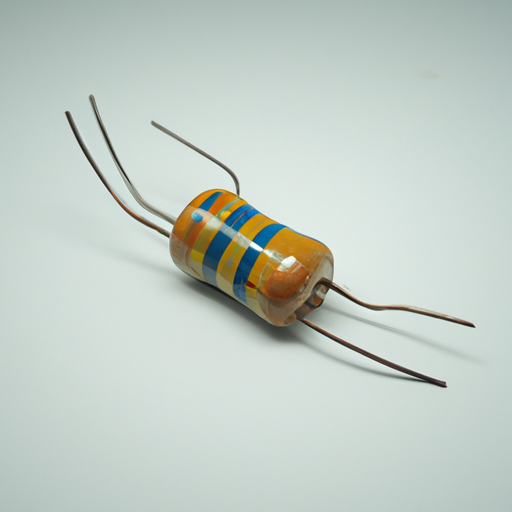
A capacitor is an electronic component that stores electrical energy in an electric field. It consists of two conductive plates separated by an insulating material known as a dielectric. When a voltage is applied across the plates, an electric field develops, allowing the capacitor to store energy.
The primary function of a capacitor is to store and release electrical energy. This ability makes capacitors essential in various applications, including energy storage, filtering, and timing circuits.
Capacitors come in various types, each suited for specific applications. Common types include:
Ceramic Capacitors: Known for their stability and reliability, often used in high-frequency applications.
Electrolytic Capacitors: Polarized capacitors with high capacitance values, commonly used in power supply circuits.
Film Capacitors: Known for their low loss and high stability, suitable for audio and high-frequency applications.
Capacitors are widely used in power supply circuits for smoothing voltage fluctuations, in timing circuits for generating delays, and in audio equipment for filtering signals.
An inductor is a passive electronic component that stores energy in a magnetic field when an electric current flows through it. It typically consists of a coil of wire wound around a core material.
The primary function of an inductor is to resist changes in current. When the current through an inductor changes, it induces a voltage that opposes the change, a phenomenon known as self-inductance.
Inductors also come in various types, including:
Air Core Inductors: Simple coils without a core material, used in high-frequency applications.
Iron Core Inductors: Inductors with a core made of iron or ferrite, providing higher inductance values.
Toroidal Inductors: Inductors shaped like a doughnut, known for their low electromagnetic interference.
Inductors are commonly used in power supply circuits, filters, transformers, and radio frequency applications.
While capacitors and inductors both store energy, they do so in different ways.
Capacitors store energy in an electric field, while inductors store energy in a magnetic field. This fundamental difference leads to distinct behaviors in circuits.
Capacitors exhibit capacitive reactance, which decreases with increasing frequency, while inductors exhibit inductive reactance, which increases with frequency. This difference is crucial in AC circuits, where the phase relationship between voltage and current varies.
An LC circuit is a circuit that consists of both a capacitor (C) and an inductor (L). These circuits can oscillate at a specific frequency, known as the resonant frequency.
The resonant frequency of an LC circuit is determined by the values of the capacitor and inductor. It can be calculated using the formula:
\[ f_0 = \frac{1}{2\pi\sqrt{LC}} \]
where \( f_0 \) is the resonant frequency, \( L \) is the inductance, and \( C \) is the capacitance.
Resonance in LC circuits is utilized in various applications, including radio transmitters and receivers, where tuning to a specific frequency is essential for signal clarity.
In power supply circuits, capacitors and inductors work together to filter out noise and smooth voltage fluctuations. Capacitors charge and discharge to maintain a steady voltage, while inductors help to reduce ripple.
Inductors are often used in conjunction with capacitors in voltage regulation circuits, ensuring a stable output voltage despite variations in input voltage or load conditions.
In radio frequency applications, LC circuits are used to create tuned circuits that can select specific frequencies. This is essential for tuning radios to different stations.
Capacitors and inductors are also used in signal processing to filter out unwanted frequencies, allowing only the desired signals to pass through.
In audio systems, capacitors and inductors are used in crossover networks to direct different frequency ranges to appropriate speakers, ensuring optimal sound quality.
Capacitors and inductors are also employed in equalization circuits to adjust the frequency response of audio signals, enhancing the listening experience.
When designing circuits, selecting the appropriate capacitance and inductance values is crucial for achieving the desired performance.
It's essential to choose components with voltage ratings that exceed the maximum voltage they will encounter in the circuit to prevent failure.
The quality factor (Q) of capacitors and inductors indicates their efficiency. Higher Q values result in lower energy losses, making them preferable for high-performance applications.
Proper layout is vital in minimizing parasitic effects, such as unwanted capacitance and inductance, which can degrade circuit performance.
Using short leads, proper grounding techniques, and careful component placement can help reduce parasitic effects in circuits.
Real capacitors and inductors exhibit non-ideal behavior, such as equivalent series resistance (ESR), which can affect their performance in high-frequency applications.
Parasitic capacitance and inductance can introduce unwanted effects in circuits, leading to signal degradation and reduced efficiency.
Temperature and frequency variations can significantly impact the performance of capacitors and inductors, affecting their capacitance, inductance, and overall behavior.
Using components rated for higher temperatures and frequencies, as well as implementing thermal management techniques, can help mitigate these effects.
Ongoing research in materials science is leading to the development of new capacitor and inductor technologies, enhancing performance and reliability.
As electronic devices become smaller, the demand for miniaturized capacitors and inductors is increasing. Innovations in manufacturing techniques are enabling the integration of these components into compact designs.
Capacitors and inductors are playing a crucial role in renewable energy systems, such as solar inverters and wind turbines, where efficient energy storage and conversion are essential.
In electric vehicles, capacitors and inductors are used in power management systems, contributing to improved efficiency and performance.
Understanding capacitor inductors is essential for anyone involved in electrical engineering or electronics. These components are fundamental to the design and operation of a wide range of circuits, from power supplies to audio systems. By grasping their principles, applications, and design considerations, engineers can create more efficient and effective electronic devices. As technology continues to evolve, staying informed about advancements in capacitor and inductor technology will be crucial for future innovations.
- "The Art of Electronics" by Paul Horowitz and Winfield Hill
- "Electronic Principles" by Albert Malvino and David Bates
- Khan Academy: Electrical Engineering
- All About Circuits: Capacitors and Inductors
- IEEE Transactions on Power Electronics
- Journal of Applied Physics
This comprehensive overview of capacitor inductors provides a solid foundation for understanding their roles in electrical engineering. Whether you're a student, a hobbyist, or a professional, delving deeper into these components will enhance your knowledge and skills in the field.
In the realm of electrical engineering, two fundamental components play a crucial role in the functioning of various circuits: capacitors and inductors. While they serve different purposes, their interplay is vital in many applications, leading to the term "capacitor inductors." This article aims to demystify these components, explore their relationship, and highlight their significance in practical applications.
A capacitor is an electronic component that stores electrical energy in an electric field. It consists of two conductive plates separated by an insulating material known as a dielectric. When a voltage is applied across the plates, an electric field develops, allowing the capacitor to store energy.
The primary function of a capacitor is to store and release electrical energy. This ability makes capacitors essential in various applications, including energy storage, filtering, and timing circuits.
Capacitors come in various types, each suited for specific applications. Common types include:
Ceramic Capacitors: Known for their stability and reliability, often used in high-frequency applications.
Electrolytic Capacitors: Polarized capacitors with high capacitance values, commonly used in power supply circuits.
Film Capacitors: Known for their low loss and high stability, suitable for audio and high-frequency applications.
Capacitors are widely used in power supply circuits for smoothing voltage fluctuations, in timing circuits for generating delays, and in audio equipment for filtering signals.
An inductor is a passive electronic component that stores energy in a magnetic field when an electric current flows through it. It typically consists of a coil of wire wound around a core material.
The primary function of an inductor is to resist changes in current. When the current through an inductor changes, it induces a voltage that opposes the change, a phenomenon known as self-inductance.
Inductors also come in various types, including:
Air Core Inductors: Simple coils without a core material, used in high-frequency applications.
Iron Core Inductors: Inductors with a core made of iron or ferrite, providing higher inductance values.
Toroidal Inductors: Inductors shaped like a doughnut, known for their low electromagnetic interference.
Inductors are commonly used in power supply circuits, filters, transformers, and radio frequency applications.
While capacitors and inductors both store energy, they do so in different ways.
Capacitors store energy in an electric field, while inductors store energy in a magnetic field. This fundamental difference leads to distinct behaviors in circuits.
Capacitors exhibit capacitive reactance, which decreases with increasing frequency, while inductors exhibit inductive reactance, which increases with frequency. This difference is crucial in AC circuits, where the phase relationship between voltage and current varies.
An LC circuit is a circuit that consists of both a capacitor (C) and an inductor (L). These circuits can oscillate at a specific frequency, known as the resonant frequency.
The resonant frequency of an LC circuit is determined by the values of the capacitor and inductor. It can be calculated using the formula:
\[ f_0 = \frac{1}{2\pi\sqrt{LC}} \]
where \( f_0 \) is the resonant frequency, \( L \) is the inductance, and \( C \) is the capacitance.
Resonance in LC circuits is utilized in various applications, including radio transmitters and receivers, where tuning to a specific frequency is essential for signal clarity.
In power supply circuits, capacitors and inductors work together to filter out noise and smooth voltage fluctuations. Capacitors charge and discharge to maintain a steady voltage, while inductors help to reduce ripple.
Inductors are often used in conjunction with capacitors in voltage regulation circuits, ensuring a stable output voltage despite variations in input voltage or load conditions.
In radio frequency applications, LC circuits are used to create tuned circuits that can select specific frequencies. This is essential for tuning radios to different stations.
Capacitors and inductors are also used in signal processing to filter out unwanted frequencies, allowing only the desired signals to pass through.
In audio systems, capacitors and inductors are used in crossover networks to direct different frequency ranges to appropriate speakers, ensuring optimal sound quality.
Capacitors and inductors are also employed in equalization circuits to adjust the frequency response of audio signals, enhancing the listening experience.
When designing circuits, selecting the appropriate capacitance and inductance values is crucial for achieving the desired performance.
It's essential to choose components with voltage ratings that exceed the maximum voltage they will encounter in the circuit to prevent failure.
The quality factor (Q) of capacitors and inductors indicates their efficiency. Higher Q values result in lower energy losses, making them preferable for high-performance applications.
Proper layout is vital in minimizing parasitic effects, such as unwanted capacitance and inductance, which can degrade circuit performance.
Using short leads, proper grounding techniques, and careful component placement can help reduce parasitic effects in circuits.
Real capacitors and inductors exhibit non-ideal behavior, such as equivalent series resistance (ESR), which can affect their performance in high-frequency applications.
Parasitic capacitance and inductance can introduce unwanted effects in circuits, leading to signal degradation and reduced efficiency.
Temperature and frequency variations can significantly impact the performance of capacitors and inductors, affecting their capacitance, inductance, and overall behavior.
Using components rated for higher temperatures and frequencies, as well as implementing thermal management techniques, can help mitigate these effects.
Ongoing research in materials science is leading to the development of new capacitor and inductor technologies, enhancing performance and reliability.
As electronic devices become smaller, the demand for miniaturized capacitors and inductors is increasing. Innovations in manufacturing techniques are enabling the integration of these components into compact designs.
Capacitors and inductors are playing a crucial role in renewable energy systems, such as solar inverters and wind turbines, where efficient energy storage and conversion are essential.
In electric vehicles, capacitors and inductors are used in power management systems, contributing to improved efficiency and performance.
Understanding capacitor inductors is essential for anyone involved in electrical engineering or electronics. These components are fundamental to the design and operation of a wide range of circuits, from power supplies to audio systems. By grasping their principles, applications, and design considerations, engineers can create more efficient and effective electronic devices. As technology continues to evolve, staying informed about advancements in capacitor and inductor technology will be crucial for future innovations.
- "The Art of Electronics" by Paul Horowitz and Winfield Hill
- "Electronic Principles" by Albert Malvino and David Bates
- Khan Academy: Electrical Engineering
- All About Circuits: Capacitors and Inductors
- IEEE Transactions on Power Electronics
- Journal of Applied Physics
This comprehensive overview of capacitor inductors provides a solid foundation for understanding their roles in electrical engineering. Whether you're a student, a hobbyist, or a professional, delving deeper into these components will enhance your knowledge and skills in the field.